THE RUNAWAYS


Playlist Details
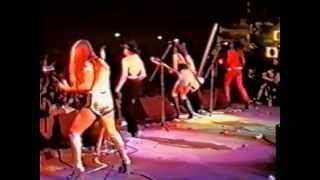
The Runaways were far more than a teenage novelty or a provocative footnote in rock history — they were a groundbreaking all-female hard rock band that challenged gender norms at a time when rock music was overwhelmingly male-dominated. Formed in Los Angeles in 1975 by producer Kim Fowley, the band emerged from the raw energy of 1970s glam rock and proto-punk, bringing attitude, volume, and unapologetic presence to a scene that rarely made space for young women with electric guitars.
The classic lineup featured Joan Jett (rhythm guitar, vocals), Cherie Currie (lead vocals), Lita Ford (lead guitar), Jackie Fox (bass), and Sandy West (drums). What made The Runaways truly radical was not just that they were women, but that they played loud, aggressive rock rooted in riffs, distortion, and rebellious lyrics — styles traditionally reserved for male bands. Songs like “Cherry Bomb,” “Queens of Noise,” “California Paradise,” and “Dead End Justice” combined teenage defiance with hard-edged musicianship.
In the United States, The Runaways were often misunderstood, dismissed as a gimmick, or overshadowed by their controversial image. However, internationally — particularly in Japan — they achieved massive success, selling out arenas and inspiring a devoted fanbase. This contrast highlighted a broader issue: while their talent and intensity were undeniable, cultural biases limited their recognition at home.
Despite internal conflicts, industry pressure, and the challenges of being young women navigating a hostile music business, The Runaways released four studio albums between 1976 and 1978. Their music evolved from glam-infused hard rock to darker, more punk-leaning material, reflecting both their growth as musicians and the turbulent realities behind the scenes. The band ultimately disbanded in 1979, but their influence was only beginning.
The true legacy of The Runaways became clearer in hindsight. Joan Jett went on to massive success with The Blackhearts, shaping punk and rock radio for decades. Lita Ford became a pioneering female guitar hero in heavy metal. Countless artists across punk, hard rock, grunge, and alternative scenes — from Bikini Kill to The Donnas to modern female-fronted rock and metal bands — cite The Runaways as a vital inspiration.
Today, The Runaways are often described as “forgotten,” but that description is misleading. They are not forgotten — they are under-acknowledged. Their story exposes how history often sidelines artists who arrive before the world is ready for them. The Runaways did not just open doors for women in rock; they kicked them down, proving that raw power, rebellion, and authenticity have no gender.
In retrospect, The Runaways stand as one of the most important rock bands of the 1970s — not despite being all-female, but because they refused to let that label define or limit them.


The Runaways Related Posts
- The Fiery Essence of ‘Burn’: Deep Purple’s Hard Rock LegacyDeep Purple's 'Burn' is more than just an album; it …
- Fiona Apple: A Voice of Raw Emotion and Artistic IntegrityFiona Apple is an American singer-songwriter known for her distinctive …
- The Zombified Mindset: How Falling In Reverse Reflects Our Cultural DystopiaFalling In Reverse's "ZOMBIFIED" serves as a striking commentary on …
- The Allure of Pirate Metal: ALESTORM’s Nautical Anthems and Their Cultural ResonanceALESTORM's 'Sunset on the Golden Age' captures the adventurous spirit …
- Madness and Decadence – Every Midnight Calls Me BackA neon-lit requiem where Futuristic Rock, Pop, and Indie Pop …
- Avenged Sevenfold: A Journey Through Rock HistoryAvenged Sevenfold, formed in 1999, is a pivotal American rock …
- The Allure of the Undead: Exploring the Musical Connection of Vampires in Art and CultureExplore the dark elegance of vampire-inspired music and art, uncovering …
- The Enigmatic Allure of ‘Strange Kind of Women’: A Musical Journey Through TimeThe concert featuring 'Strange Kind of Women' at La Grande …
- The Divine Symphony: Exploring the Pantheon of Music Through ImageryExplore the intersection of myth and music as we delve …