Few figures from the golden age of 1980s heavy metal embodied shock, confrontation, and theatrical excess as completely as Blackie Lawless. As the founder, vocalist, and driving force behind W.A.S.P., Lawless became one of the most polarizing personalities of the glam and shock metal era — admired by fans for his unapologetic intensity and condemned by critics, politicians, and religious groups for the very same reasons.
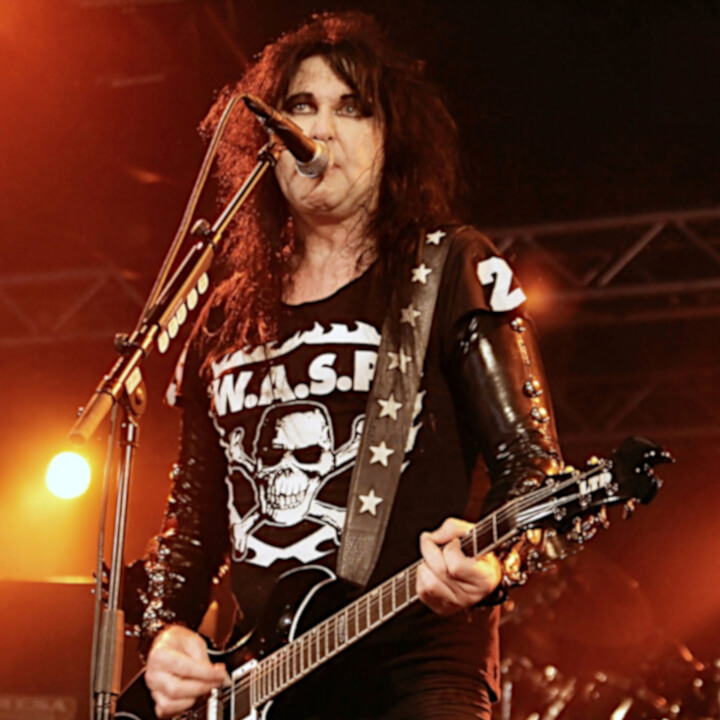
Yet behind the blood, controversy, and aggressive imagery was also an unusually intelligent and articulate figure whose interviews often revealed a far more reflective personality than the public expected.
The Rise of W.A.S.P.
Formed in Los Angeles in the early 1980s, W.A.S.P. emerged during the explosive growth of the Sunset Strip metal scene alongside bands such as Mötley Crüe, Ratt, and Quiet Riot.
But W.A.S.P. stood apart almost immediately.
While many glam metal bands emphasized decadence, partying, and sexual imagery, Blackie Lawless pushed things into openly confrontational territory:
- chainsaws on stage,
- raw meat thrown into audiences,
- torture imagery,
- codpieces made from saw blades,
- and lyrics designed to provoke outrage.
The band’s very name generated controversy, with rumors surrounding the meaning of “W.A.S.P.” circulating for decades. Lawless himself often refused to fully clarify the acronym, adding to the mythology and confusion surrounding the group.
Shock Rock as Performance Art
Although W.A.S.P. was frequently dismissed by critics as pure shock value, Blackie Lawless consistently argued in interviews that the theatricality served a larger purpose.
In many conversations throughout the 1980s and 1990s, he described shock rock as a form of exaggerated theater influenced by:
- Alice Cooper,
- horror films,
- comic books,
- and social rebellion.
Lawless often compared stage performance to cinematic storytelling rather than literal ideology. According to him, audiences misunderstood the distinction between performance persona and personal identity.
This tension became one of the defining characteristics of his public image:
- Was he a dangerous provocateur?
- A satirist?
- A businessman exploiting controversy?
- Or an artist intentionally confronting moral panic?
Different generations answered that question differently.
The PMRC Era and Moral Panic
Blackie Lawless became one of the most visible targets during the mid-1980s moral panic surrounding heavy metal music.
Organizations such as the Parents Music Resource Center accused metal bands of promoting:
- violence,
- satanism,
- sexual deviance,
- and corruption of youth.
Songs like “Animal (F**k Like a Beast)” turned W.A.S.P. into a lightning rod for controversy.
Ironically, the backlash often strengthened the band’s popularity among young listeners who viewed censorship campaigns as authoritarian and hypocritical.
In interviews from that period, Lawless frequently demonstrated a sharp awareness of media sensationalism. Rather than appearing intimidated, he often confronted interviewers directly and challenged what he viewed as performative outrage.
Unlike some contemporaries who tried to soften their image for mainstream acceptance, Lawless generally leaned into confrontation.
The Intelligence Behind the Persona
One of the most surprising things about Blackie Lawless for many first-time listeners is how articulate he can be in long-form interviews.
Beneath the aggressive image, he often speaks thoughtfully about:
- psychology,
- manipulation,
- religion,
- politics,
- fame,
- addiction,
- and the music industry.
Many journalists who expected a caricature of a “wild metal singer” instead encountered someone highly analytical and self-aware.
Over time, his interviews evolved significantly. While early appearances often leaned into provocation and rebellious energy, later interviews revealed a darker and more introspective figure shaped by:
- the collapse of the classic metal industry,
- personal struggles,
- changing cultural attitudes,
- and aging within a genre built around youthful excess.
The Religious Turn
One of the most unexpected developments in Blackie Lawless’s public life was his eventual embrace of Christianity.
After decades of being associated with anti-religious imagery and moral controversy, Lawless began speaking openly about faith and spiritual transformation during the 2000s.
This shift surprised many longtime fans and critics alike.
However, Lawless repeatedly insisted that:
- he never truly promoted Satanism,
- much of the imagery was theatrical,
- and many accusations against W.A.S.P. were exaggerated by media narratives.
His later interviews often explore themes of:
- guilt,
- redemption,
- mortality,
- and personal accountability.
This evolution added another layer of complexity to his legacy. Rather than remaining frozen as an 1980s shock-rock caricature, Lawless became a far more contradictory and psychologically interesting figure.
A Difficult Relationship With the Media
Throughout his career, Blackie Lawless developed a reputation for being both compelling and unpredictable in interviews.
Some journalists described him as:
- charismatic,
- intelligent,
- and deeply thoughtful.
Others found him:
- confrontational,
- defensive,
- or deliberately evasive.
Part of this came from his distrust of media sensationalism. Lawless frequently accused interviewers and television programs of reducing heavy metal culture to simplistic stereotypes.
In many ways, he became trapped inside the very image he helped create:
the public wanted “Blackie Lawless the monster,” while the real person behind the persona often seemed more philosophical than destructive.
The Legacy of Blackie Lawless
Today, Blackie Lawless remains one of the most fascinating personalities to emerge from the 1980s metal scene.
Unlike many artists from that era who became nostalgic self-parodies, Lawless retained an unusual intensity and seriousness about his work. Even critics who disliked W.A.S.P.’s shock tactics often acknowledged his commitment and authenticity.
His influence can still be seen in later generations of:
- theatrical metal,
- industrial rock,
- horror-inspired performance art,
- and dark visual aesthetics.
More importantly, his career reflects a broader truth about heavy metal history:
many of its most controversial figures were far more intellectually complex than mainstream culture initially assumed.
Beyond the Shock Value
With hindsight, Blackie Lawless appears less like a simple provocateur and more like a symbol of a particular cultural moment:
a time when heavy metal became a battlefield for debates about censorship, morality, freedom of expression, and generational fear.
The outrage surrounding W.A.S.P. may have been genuine, but so was the fascination.
And decades later, that tension remains part of what makes Blackie Lawless such an enduring figure in rock history.
Blackie Lawless: The Controversial Voice of 1980s Heavy Metal Related Posts
- The Neon God: Part 2 – The Demise: A Journey Through Darkness and ControlW.A.S.P.'s "The Neon God, Part 2 – The Demise" explores …
- W.A.S.P. at Castle Donington 1992: Unveiling the Great MisconceptionsW.A.S.P.'s performance at Castle Donington in 1992 was more than …
- Heavens Hung in Black: The Dark Aesthetics of W.A.S.P.W.A.S.P.'s "Heavens Hung in Black" serves as a haunting exploration …