The Song in Focus
Draconian’s “The Sethian” stands as one of the defining statements from the band’s album Under a Godless Veil, released via Napalm Records. Where many doom-death acts lean on blunt force, the Swedish ensemble continues to refine a long-cultivated language of sorrow and grace, channeling heaviness through melody, spacious arrangements, and a dramatic vocal interplay that remains central to their identity. The official video frames that sensibility with a patient, atmospheric touch, giving the music’s slow-blooming power room to breathe.
Sound and Structure
At its core, “The Sethian” draws from the classic pillars of gothic and death-doom, yet it moves with a restrained elegance. Guitars unfurl in broad, minor-key harmonies, alternating between droning chords, clean arpeggios, and melodic lead lines that rise like distant beacons through the gloom. Rather than crowding the stereo field, the parts are layered with care, allowing sustain and silence to color the edges of each phrase.
The rhythm section keeps the pulse unhurried. Drums favor deliberate, weighty beats and cymbal swells that mark transitions instead of forcing them, while the bass threads subtle counters that deepen the harmonic bedrock. Keyboards provide a cool, luminous backdrop—pads, faint string voicings, and occasional piano figures that emphasize the band’s affinity for drama without excess.
Vocally, the track embodies Draconian’s signature contrast. Ethereal, mournful cleans hover over the verses, while cavernous growls deliver a more earthbound gravity. The effect is dialogic rather than combative, a conversation between the vulnerable and the abyssal. Melodic refrains recur like ritual invocations, returning with slightly altered intensity as the song moves through its arc.
Lyrical and Thematic Undercurrents
The title points toward Sethian Gnosticism, a strand of late antique mysticism that contemplates a fallen world, hidden knowledge, and the hope of transcendence. Without needing to turn the song into overt doctrine, Draconian channel that conceptual framework into textual mood: longing for a lost light, a deep skepticism toward appearances, and a pull toward the inner life when the outer seems void of meaning. In keeping with the band’s writing across the last decade, romantic imagery and spiritual weariness sit side by side, nudging the listener to read grief as both human and cosmic.
This metaphysical lens also aligns with the broader album. Under a Godless Veil repeatedly contemplates absence and revelation, approaching the sacred and the profane through fogged glass. “The Sethian” crystallizes those concerns in a compact, memorable form, pairing introspection with a sense of ritual that feels both intimate and vast.
Visual Language and Atmosphere
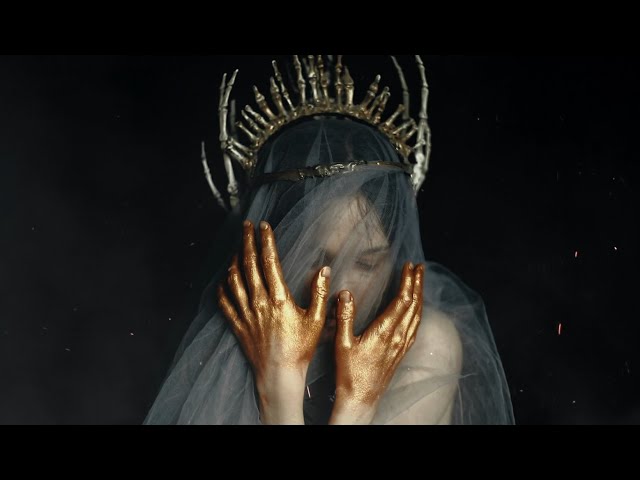
The official video approaches the song with restraint. Rather than overwhelming the narrative with spectacle, the imagery emphasizes mood, texture, and the gravitas of performance. The pacing mirrors the music’s slow tension and release, drawing the eye to shadow, motion, and the physicality of sound. This is a visual companion that trusts the composition, heightening its contrasts and giving the listener space to inhabit the song’s emotional weather.
Production and Arrangements
Draconian’s arrangement ethos on “The Sethian” privileges clarity. Guitars are moderately saturated rather than suffocating, which keeps melodic phrasing intelligible and lets vocal details cut through. Reverb and delay are used with intent, creating depth without sacrificing definition. The low end is warm and rounded, shaping the track’s somber gait. Dynamics are treated as storytelling elements: the verses unfurl quietly, while heavier passages widen and thicken, then recede again, maintaining a narrative flow that supports the lyrical trajectory.
Draconian’s Ongoing Aesthetic
Across their catalog, Draconian have refined a balance of doom-death weight and gothic romanticism. “The Sethian” captures that synthesis with a confidence that feels earned. The interplay of voices remains central to the band’s character, but it’s the supporting architecture—the measured tempos, the melancholic harmony language, the attention to atmosphere—that translates emotion into form. The result is not just a heavy ballad but a work that lingers, rewarding repeat listens with new shades of meaning.
Context Within Modern Doom and Gothic Metal
In a landscape where production can skew toward maximalism, “The Sethian” opts for space and intention. Its tempo and tonal choices align with the lineage of 1990s doom-death, yet the song’s compositional patience and delicate ornamentation feel unmistakably contemporary. It’s a reminder that extremity need not be loud to be devastating, and that melody—handled with restraint—can carry as much weight as any wall of sound.
Listening Notes
- Melodic clarity: Lead guitar motifs recur like thematic guideposts, carving a melancholic path through each section.
- Vocal dialogue: The contrast between clean and growled lines functions as narrative counterpoint, rather than simple juxtaposition.
- Textural keys: Subtle keyboard layers add luminosity to the gloom, setting harmonic contours without dominating the mix.
- Dynamic patience: Swells and retreats feel earned, heightening the sense of ritual and reflection.
Why “The Sethian” Matters
For longtime followers, the song reaffirms Draconian’s devotion to atmosphere, poetry, and the emotional breadth of doom. For new listeners, it offers a clear window into the band’s strengths—an invitation to sit with sorrow long enough to find what gleams inside it. Paired with a video that foregrounds mood over spectacle, “The Sethian” becomes both statement piece and threshold, a point of entry into a record and a band that continue to value depth over velocity.
DRACONIAN – The Sethian (Official Video) Related Posts
- DRACONIAN – Sorrow Of SophiaThe song "Sorrow Of Sophia" by DRACONIAN serves as a …
- Sex Pistols – God Save The QueenThe Sex Pistols continue to influence the music scene with …
- AC/DC – You Shook Me All Night Long ⚡( Cover by Minniva ft Quentin Cornet )Minniva, featuring Quentin Cornet, presents a cover of AC/DC's classic …
- MARKO HIETALA – Dead God’s Son (OFFICIAL LYRIC VIDEO)Marko Hietala has released the official lyric video for "Dead …
- XANDRIA – We Are Murderers (We All) (ft. Björn Strid of Soilwork) | Napalm RecordsXandria is set to release their seventh studio album, "Theater …
- UNLEASH THE ARCHERS – Northwest Passage (Official Video) | Napalm RecordsUnleash the Archers has released a new music video for …