
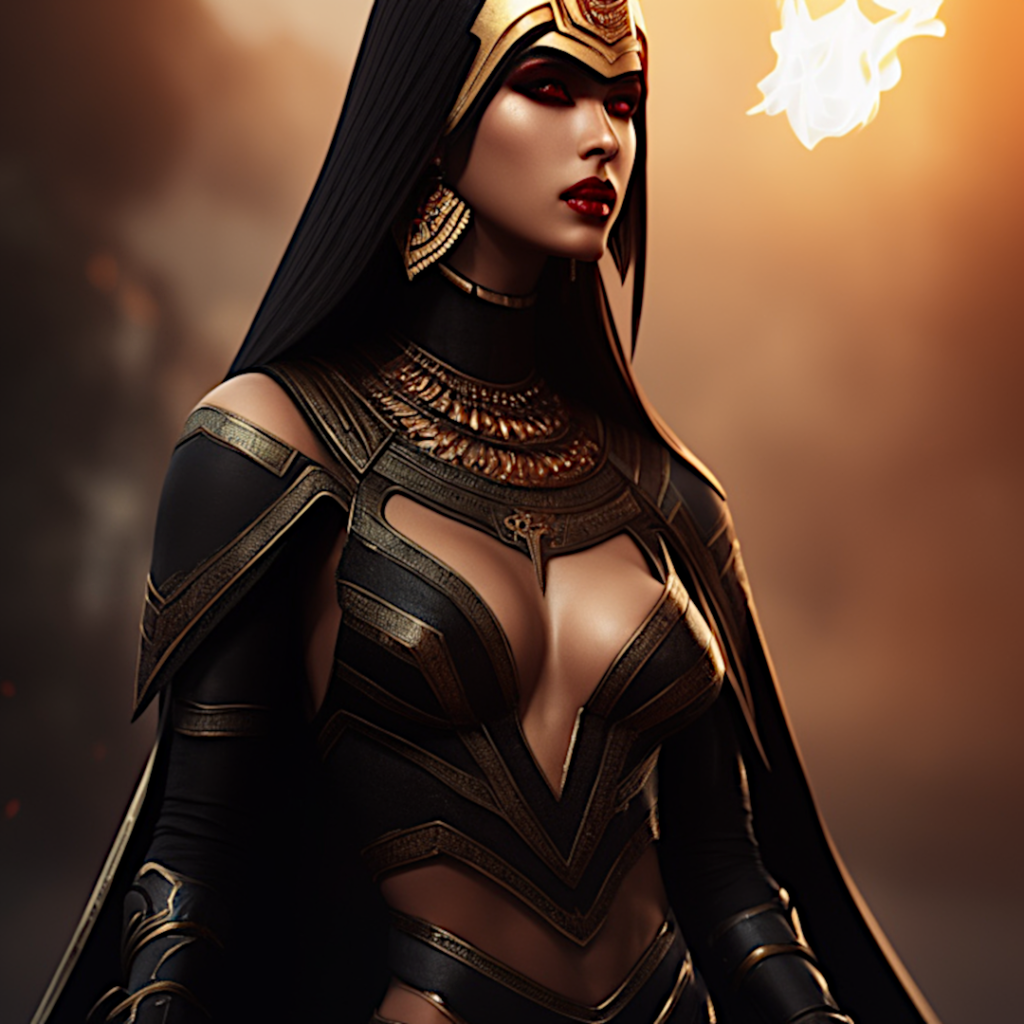
Maat is a significant deity in ancient Egyptian mythology, representing the concepts of truth, balance, and cosmic order. As a goddess, she embodies the fundamental principles that govern the universe and the moral order of society. Maat is often depicted as a woman with an ostrich feather on her head, symbolizing truth and justice. This feather plays a crucial role in the judgment of the dead, where it is weighed against the heart of the deceased to determine their fate in the afterlife.
Cultural and mythological origins of Maat can be traced back to the early dynastic period of Egypt, around 3000 BCE, and she remains a pivotal figure throughout the history of ancient Egyptian religion. Maat was not only revered as a goddess but also as a concept that influenced the laws and ethics of Egyptian society. The ancient Egyptians believed that maintaining Maat was essential for the stability of the cosmos and the well-being of the state.
Attributes and symbolism associated with Maat include her role as the personification of truth and justice. She is often invoked in the context of the afterlife, where her feather is used in the Weighing of the Heart ceremony, a pivotal moment for souls seeking entry into the afterlife. Maat’s influence extends to the pharaohs, who were expected to uphold her principles in their governance. The concept of Maat permeated various aspects of Egyptian life, including law, morality, and social order.
Historically, Maat’s influence can be seen in the development of Egyptian philosophy and governance. The concept of Maat guided rulers and was integral to the administration of justice. In later interpretations, Maat’s ideals were sometimes adapted or reinterpreted, but her essence as a symbol of order and truth remained consistent. The legacy of Maat continues to be a subject of interest in modern studies of ancient Egyptian culture, highlighting her importance in the pantheon of Egyptian deities.
In summary, Maat stands as a powerful symbol of cosmic order, truth, and balance in ancient Egyptian mythology, influencing both the spiritual and societal frameworks of one of history’s most fascinating civilizations.