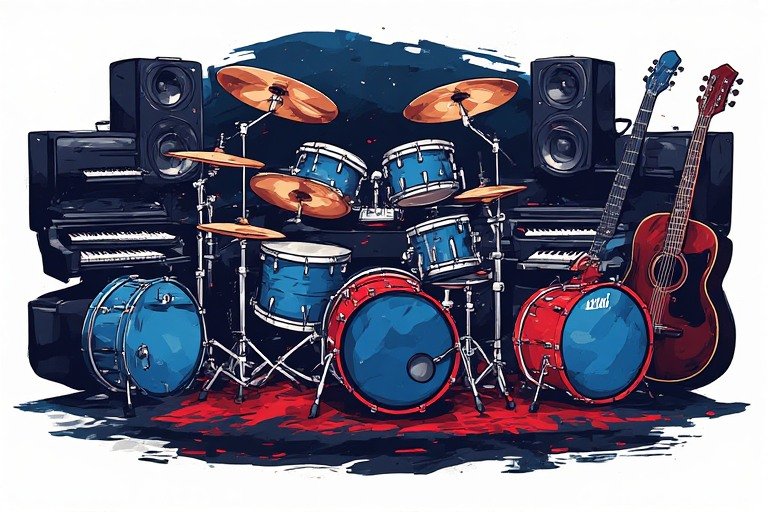
The Enigmatic Allure of Blue Light
In the realm of rock music, few colors evoke as much intrigue as blue. It is a hue that transcends mere aesthetics, often symbolizing depth, melancholy, and introspection. Deep Purple’s album, “The House of Blue Light,” released in 1987, encapsulates this essence, inviting listeners to explore the emotional landscapes that the color blue can represent. The title itself conjures images of a sanctuary, a place where music and emotion intertwine, echoing the band’s legacy of profound lyrical themes and sonic experimentation.
Musical Resonance and Symbolism
The use of blue light in the context of music can be seen as a metaphor for the complex emotions that artists convey through their work. For Deep Purple, the reformed Mark II lineup brought a renewed vigor, yet the shadows of their past lingered, reflected in the album’s title. The juxtaposition of light and dark in the album’s imagery can be interpreted as a nod to the band’s journey—celebrating triumphs while acknowledging struggles. This duality resonates deeply with fans, creating a shared experience that transcends generations.
Cultural Impact and Interpretations
Throughout music history, the color blue has been associated with various genres, particularly blues and rock. It represents a spectrum of emotions, from sorrow to serenity, and has been embraced by countless artists. Deep Purple’s exploration of this theme in “The House of Blue Light” aligns with a broader cultural narrative, where musicians often use color as a tool for expression. The album’s soundscapes invite listeners to reflect on their own experiences, tapping into the universal language of music that speaks to the heart.
The Mythology of Blue Light in Music
Beyond its aesthetic appeal, blue light has also woven itself into the mythology of music. Some believe that blue light can enhance creativity and evoke inspiration, a notion that has been echoed by various artists across genres. The idea that certain colors can influence mood and artistic expression adds a layer of mystique to the music industry. Deep Purple’s choice of blue light as a thematic element may not only be an artistic decision but also a nod to this mythological belief, inviting listeners to engage with their music on a deeper level.
Conclusion: The Lasting Legacy of Blue Light
As listeners continue to explore the depths of “The House of Blue Light,” the symbolic interpretations of blue light remain as relevant as ever. It serves as a reminder of the emotional power of music and its ability to connect us through shared experiences. While the album itself is a product of its time, the themes it presents resonate across generations, proving that the allure of blue light—both in color and sound—will forever illuminate the world of music.
CONTINUE TO MAIN POST
Illuminating the Mystique: The Symbolism of ‘Blue Light’ in Deep Purple’s Musical Journey Related Posts
- Mythic Echoes: The Enchantment of NFT Music TokensExplore the enchanting world of NFT music tokens through the …
- The Haunting Allure of Blue Oyster Cult’s ‘(Don’t Fear) The Reaper’Blue Oyster Cult's '(Don't Fear) The Reaper' transcends its catchy …
- Black Sabbath – LonerBlack Sabbath has released a new single titled "Loner," featured …