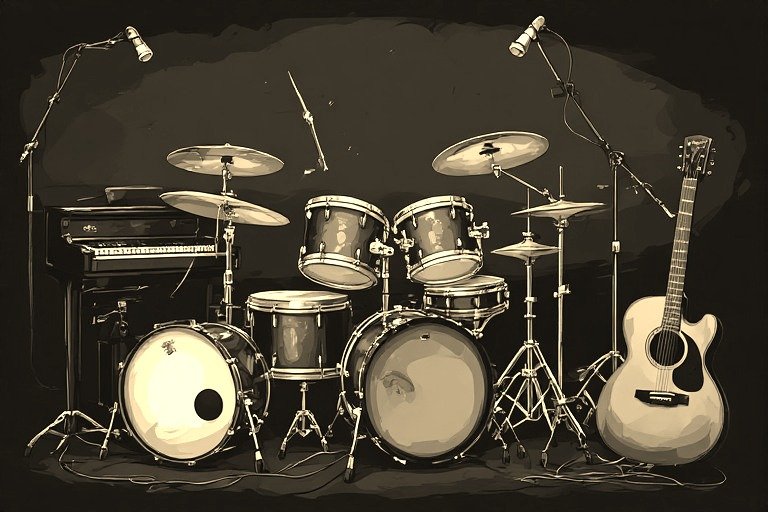
The Divine Muse of Music
In the realm of ancient Egyptian mythology, few deities resonate as deeply as Bast, the goddess often depicted with the head of a lioness or domestic cat. Revered for her roles as protector, goddess of joy, and fertility, Bast’s influence extends beyond the sacred temples of Egypt into the realm of music and artistic expression. Her duality as both a nurturing mother and a fierce protector embodies the essence of creativity, inspiring musicians and artists alike to channel their emotions into sound and form.
Symbolism in Sound
Bast’s association with music is rich and complex. In ancient times, music was not merely entertainment but a sacred practice believed to invoke the divine. Instruments such as the sistrum—a rattle used in rituals—were thought to resonate with the goddess’s spirit, creating a bridge between the mortal realm and the divine. This connection highlights how music serves as a conduit for spiritual expression, reflecting the joy and protection that Bast embodies. Today, contemporary musicians often draw on this symbolism, creating works that seek to evoke a sense of empowerment and reverence, much like the ancient rituals dedicated to Bast.
Modern Interpretations and Cultural Impact
In recent years, the aesthetic of Bast has found its way into popular music and visual arts, where artists explore themes of femininity, strength, and mystique. The imagery of the cat goddess has inspired a myriad of songs and performances that celebrate female empowerment and resilience. From indie bands to pop icons, the feline grace of Bast serves as a powerful metaphor for the complexities of womanhood, resonating with audiences seeking both solace and strength in their musical experiences.
Controversies and Interpretations
While the reverence for Bast is widespread, interpretations of her symbolism can vary significantly. Some modern interpretations lean into the more mystical aspects of her character, emphasizing her protective qualities and the nurturing side of femininity. Others may critique the romanticization of ancient deities, arguing that such interpretations can oversimplify the rich tapestry of beliefs surrounding figures like Bast. It raises an important question: how do we balance respect for ancient traditions with contemporary interpretations that may diverge from historical accuracy?
Conclusion: A Living Legacy
The legacy of Bast continues to inspire not only musicians but also a broader cultural conversation about the intersection of mythology and modernity. As we listen to the melodies that echo her name, we are reminded of the power of music to transcend time and space, weaving together the threads of ancient beliefs with contemporary artistic expression. In this way, Bast remains not just a figure of the past but a living muse, inviting us to explore the depths of our own creativity and connection to the divine.
*Note: This article draws upon historical interpretations and modern artistic expressions, blending fact with imaginative interpretations of Bast’s influence in music and culture.*
CONTINUE TO MAIN POST
The Harmonious Echo of Bast: Music, Myth, and Mystical Aesthetics Related Posts
- Nocturnal Divinities: The Surreal Mythology of Music’s Darkest IconsExplore the enchanting world of nocturnal divinities in music, where …
- Nahemah Legion – Embrace the Enigmatic World of Dark Dreams in this Captivating NFT CollectionNahemah Legion invites enthusiasts into a captivating NFT collection that …
- Echoes of Antiquity: The Resonance of Roman and Egyptian Aesthetics in Modern MusicExplore the fascinating intersection of Roman and Egyptian aesthetics in …