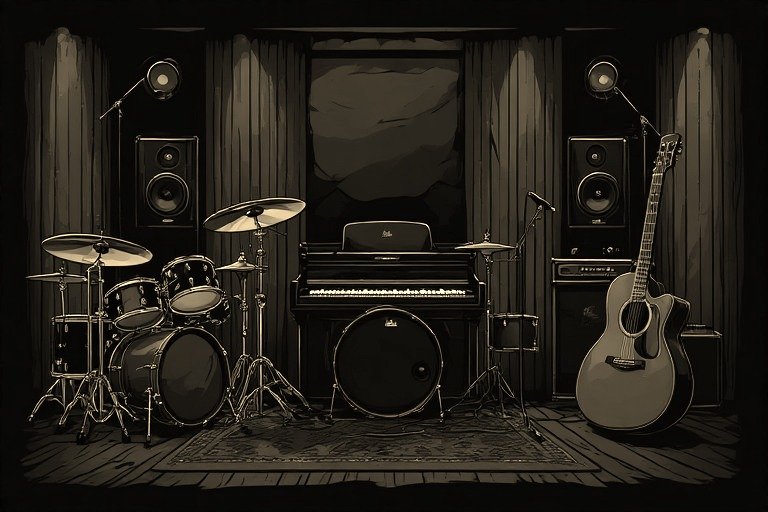
The Quiet Collapse of Identity
In an era where music serves as both a mirror and a shaper of cultural identity, the phenomenon of ‘identity erosion’ resonates deeply. As we traverse through the sonic landscapes crafted by contemporary artists, we encounter a haunting reflection of a world that has ended quietly—where the very essence of who we are seems to dissolve in the cacophony of sound. This erosion is not merely a personal experience; it reverberates through genres, styles, and the very fabric of musical expression.
Voices That Deceive
Musicians today often embody the duality of truth and deception, mirroring a society where authenticity is questioned. The rise of digital production has enabled artists to manipulate their voices, creating an illusion of perfection that can obscure the rawness of human emotion. This manipulation raises questions about the authenticity of identity in music: Are we listening to the true self of the artist, or merely a polished facade? In this context, the music becomes a battleground where the struggle for genuine expression clashes with the allure of curated personas.
Kingdoms of Sound
As bands and solo artists rise and fall, they reflect the transient nature of cultural kingdoms. Each musical movement, whether it be grunge, hip-hop, or electronic, can be seen as a kingdom that eventually self-destructs under the weight of its own ideals. The cyclical nature of these genres illustrates how quickly identity can shift, leaving listeners grappling with a sense of loss as their favorite sounds fade into obscurity. This relentless evolution prompts a broader inquiry into what it means to belong in a world where musical identities are constantly in flux.
The Hunger for Connection
In a landscape where identity is eroded, the hunger for connection grows ever more palpable. Artists tap into this longing, crafting songs that resonate with the collective experience of isolation and disconnection. The emotional weight of these tracks often serves as a reminder of what it means to be human in a fragmented world. Here, music transcends mere entertainment; it becomes a lifeline, a means of forging connections amidst the chaos.
Shadows of Emotion
As we listen to the evolving soundscapes, we encounter shadows of emotions that once defined us. The atmospheric voids and mechanical precision found in modern compositions evoke a sense of nostalgia for a time when identity felt more stable. Yet, as these emotions fade, they leave behind a haunting silence—a reminder that the music we once cherished can also signify the loss of something profound. This duality invites listeners to reflect on their own identities, challenging them to confront the shadows that linger in their lives.
The Signals of Change
In an age dominated by rapid technological advancement, the signals of change are everywhere in the music industry. Artists are increasingly experimenting with new forms and structures, breaking traditional boundaries in search of innovative expressions. This constant evolution can lead to a sense of disorientation, as listeners struggle to keep pace with the shifting landscape. Yet, within this chaos lies an opportunity for reinvention—a chance to redefine identity through the very act of creation.
The Breaking of Thresholds
Thresholds in music, much like in life, are often meant to be crossed. The act of breaking through these barriers can signify a rebirth of identity, allowing artists to explore new territories of sound and meaning. However, this journey can also lead to a sense of fragmentation, as the familiar comforts of established genres give way to the unknown. In this sense, music becomes a metaphor for the human experience—an exploration of the thresholds we encounter as we navigate our own identities.
The Folding of Skies
The metaphor of folding skies in music evokes imagery of collapsing boundaries and merging realities. As genres blend and influences intertwine, the lines that once defined musical identities blur, creating a rich tapestry of sound. This fusion reflects the complexity of modern identity, where individuals often embody multiple influences and experiences. The folding of these skies challenges listeners to embrace the fluidity of identity, encouraging them to find beauty in the chaos.
Systems That Dominate
In the backdrop of this sonic exploration, systems of power and control loom large. The music industry, with its corporate structures and commercial pressures, often dictates the narratives that artists can explore. This domination can stifle creativity, leading to a homogenization of sound that further contributes to identity erosion. Yet, within this struggle, there are artists who resist conformity, pushing back against these systems to reclaim their narratives and assert their individuality.
A World That Stops Needing Meaning
Ultimately, the journey through the fractures of reality in music leads us to a world that seems to stop needing meaning. As listeners, we are invited to listen carefully—not for what happens, but for what stops happening. The silence that follows the collapse of identity can be both unsettling and liberating, prompting us to confront the void left in the wake of our musical landscapes. In this quiet end, we find an opportunity for reflection and renewal, as we seek to redefine our own identities in a world that is ever-changing.
CONTINUE TO MAIN POST
The Sound of Identity Erosion in Modern Music Related Posts
- Somebody to LoveThe article discusses the song "Somebody to Love" by Jefferson …
- The Neon God: A Reflection on Authoritarianism in MetalW.A.S.P.'s "The Neon God, Part 2 – The Demise" serves …
- A World That Ended Quietly: The Soundtrack of SilenceExploring the silent fractures of reality in music, this editorial …