Reaching Across the Divide
The Offspring’s official video for “Behind Your Walls” extends the song’s central ache into a stark, animated vision of disconnection and resolve. Directed by Jeb Hardwick with animation by Umbrella.tv and Hardwick, the piece casts the band’s melodic punk instincts in a more reflective light, dwelling on the question at the core of the track: how do you reach someone who has retreated behind pain and silence? As guitarist Noodles has explained, the song contemplates the struggle to bridge an emotional chasm when “it feels impossible to grab a hold of that person and pull them back to safety.”
Issued as part of the band’s late-era catalog with Concord, “Behind Your Walls” stands out for its combination of urgency and care. It sharpens the SoCal veterans’ knack for anthemic hooks while leaning into themes of mental health, isolation, and perseverance that have shadowed punk rock for decades but rarely with this kind of deliberate empathy.
What the Song Is Saying
“Behind Your Walls” turns on a simple, stubborn question: how do you get through when all you face is a blank stare? The lyrics work like a litany, trying different angles on the same dilemma, from pleading (“Tell me, how do I reach you…?”) to steady watchfulness (“I’ve been thinking, spend my time worrying”). There is no tidy resolution. Instead, the chorus returns like a tide, acknowledging the gravity of the moment and the limits of language while still pushing forward.
This measured insistence feels true to life. The song recognizes the reality of numbness and spiraling anger, the way faces blur, light fades and meaning thins when you are under. Yet it also honors the role of the person on the other side of that wall, who waits, listens, and tries again without presumption. Punk’s history is teeming with catharsis and confrontation; this track chooses patience as its weapon, which makes its power more quietly bracing.
The Sound: Melodic Muscle with a Tender Center
Musically, “Behind Your Walls” folds the band’s late 90s punch into a more contemplative frame. Clean-toned guitars sketch the verses with chiming arpeggios and tight, unhurried strumming, creating space for the vocal to land its questions. The chorus rises on layered power chords and a sturdier rhythmic drive, but the attack is tempered, more mid-tempo surge than blitz. It is a dynamic The Offspring have refined over years of writing: pull the listener in with clarity, then press the emotion home with lift and volume.
Dexter Holland’s vocal performance anchors the arrangement. He leans into open vowels and unadorned phrasing, resisting theatrics, which fits the subject matter. Backing harmonies shade the hook with width and warmth, while the rhythm section keeps the floor steady under lines that tilt toward uncertainty. Subtle production touches—guitar overdubs that flower in the chorus, reverb tails that lengthen the sense of distance—support the theme without crowding the core.
Animation as Emotional Geography
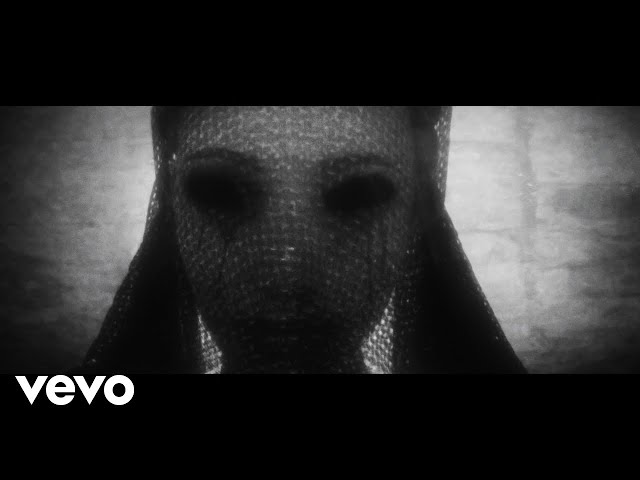
Hardwick’s animated video reads the song’s metaphors literally and then distills them into an interior landscape. The imagery suggests psychological spaces rather than fixed locations: walls that shift and tower, chasms that widen, light sources that flare and recede. The palette leans into shadow and contrast, so that moments of illumination register as small acts of defiance. Movement is purposeful. When the frame slows, the viewer feels the weight of isolation; when it accelerates, the push to connect comes across as physical effort.
What resonates most is the symmetry between visual rhythm and musical structure. Verse passages dwell on solitary figures and obstructed paths, while choruses open outward, allowing motion, height, or depth to expand in time with the band’s lift. It is not a narrative in the traditional sense, more a cycle of approaches and retreats, which underscores the song’s point: breakthroughs are rarely linear. By refusing easy resolution, the video gives the track’s compassion room to breathe.
Context in The Offspring’s Catalog
Across their decades together, The Offspring have balanced sardonic wit with sharpened social instincts, marrying sing-along choruses to topics that bite. “Behind Your Walls” tilts toward the latter, stripping back humor to focus on care, exhaustion, and the stubborn practice of showing up. That shift dovetails with a broader conversation within rock and punk circles about mental health, burnout, and the aftershocks of isolation.
Stylistically, the song connects to the band’s melodic spine: brisk, memorable refrains; guitars that trade grit for clarity when the lyric requires it; arrangements that privilege momentum over ornament. Yet there is a noticeable patience in the pacing, a willingness to let the weight of a line sit before the next hit lands. It reads as a band with deep roots in speed and snarl choosing to measure their strength differently, and finding resonance in the restraint.
Why It Lands
The track’s effectiveness comes down to proportion. The band gives the subject the space it needs without softening their identity. The chorus works as a rock hook, but it also functions as a question you can hear someone ask in real life when they are worried and tired and still determined to help. The video honors that stance by translating emotional strain into visual form without spectacle. Nothing feels inflated, which makes the song’s insistence—keep trying, keep asking—feel earned.
For listeners who associate The Offspring with relentless velocity, “Behind Your Walls” offers a reminder that urgency does not always mean speed. Here, it means attention. It means keeping time with someone else’s pain, resisting the impulse to fix quickly, and staying present long enough for connection to become possible again. That patience is the engine that drives both the song and its striking, somber companion piece.
Notable Musical Details
- Verse-to-chorus contrast: restrained, clean-toned verses cede to a broader, overdriven chorus that lifts the melodic focus.
- Vocal framing: lead lines stay conversational in the verses, opening into sustained phrases that carry the hook.
- Guitar layering: subtle overdubs thicken the chorus without overwhelming the central motif, keeping articulation crisp.
- Rhythmic steadiness: a mid-tempo pulse supports the lyric’s careful pacing, allowing space for emphasis on key lines.
Key Themes, Clearly Stated
- Isolation and perception: “When the faces all look the same” captures the numbing lens of depression.
- Witness and persistence: the repeated “I’ve been thinking… hoping, waiting” centers care as an active practice.
- Metaphors of distance: walls, edges, and fading shorelines map inner states with tactile imagery the video amplifies.
Credits
- Artist: The Offspring
- Song: Behind Your Walls
- Director: Jeb Hardwick
- Animation: Umbrella.tv and Jeb Hardwick
- Label/License: © 2022 Wabi Sabi Worldwide, LLC., under exclusive license to Concord Records. Distributed by Concord.
In the end, “Behind Your Walls” succeeds by doing something deceptively simple. It asks, patiently and repeatedly, to be let in. The music bears that weight with unfussy resolve, and the visuals turn that resolve into images you can feel. It is one of those late-career moments where a band long associated with volume and velocity finds a deeper gear, and chooses to use it in the service of care.
The Offspring – Behind Your Walls (Official Music Video) Related Posts
- Devilskin – Never See The Light (Official Music Video)Devilskin has released the official music video for "Never See …
- IN THIS MOMENT – Whore (OFFICIAL VIDEO)The official video for "Whore" by IN THIS MOMENT, featuring …
- MOONLIGHT HAZE – Ad Astra (Official Video)Moonlight Haze has released "Ad Astra," the second single from …
- Dirty Honey – Corey Coverstone Drum Solo (Lockdown Live At The Viper Room)Dirty Honey delivered a powerful performance at The Viper Room …
- ALUNAH – Heavy Bough (Official Video) | Napalm RecordsALUNAH has released their latest album, "Awakening The Forest," following …
- Belle Nielis – The Black Dog’s Trail | A spectral creature from European folklore (Music Video)The Black Dog, a spectral figure from European folklore, symbolizes …