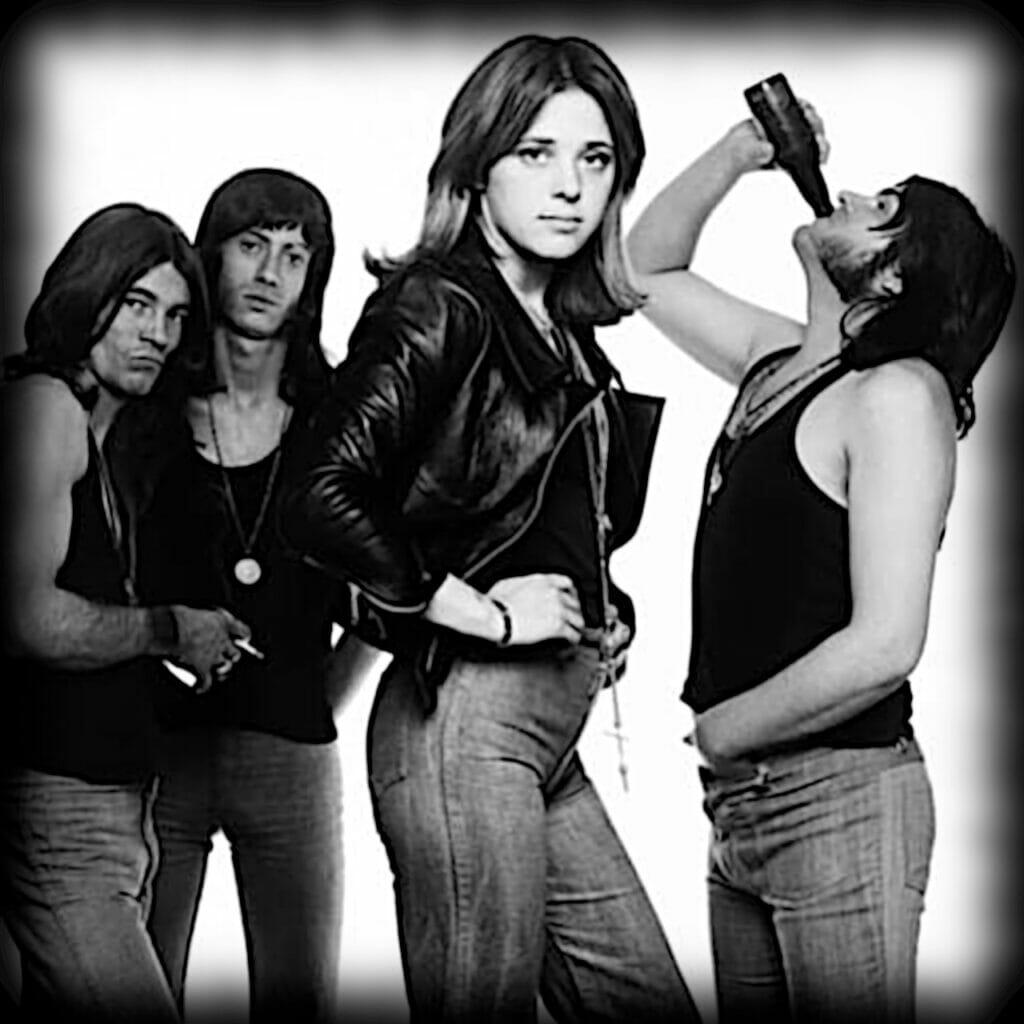
Susan Kay Quatro (born June 3, 1950), known professionally as Suzi Quatro, is one of the most influential and groundbreaking figures in rock history. An American singer, songwriter, bassist, and actress, Quatro is widely recognized as the first female rock star to achieve major international success while playing her own instrument, redefining the role of women in rock music during the 1970s.
Born in Detroit, Michigan, into a musical family, Suzi Quatro was immersed in music from an early age. She began performing as a teenager with her sisters in the band The Pleasure Seekers, gaining valuable experience in the Detroit rock scene at a time when it was dominated by male acts. Her raw energy, leather-clad image, and commanding stage presence soon set her apart from her peers.
Quatro’s breakthrough came after moving to the UK in the early 1970s, where she achieved massive success with a series of hit singles including “Can the Can,” “48 Crash,” “Daytona Demon,” and “Devil Gate Drive.” These songs showcased her powerful voice, driving bass lines, and no-nonsense rock attitude, making her a defining figure of the glam rock era while maintaining a harder edge than many of her contemporaries.
Beyond her chart success, Suzi Quatro’s influence extended far beyond the 1970s. She proved that women could lead rock bands, play heavy instruments, and command the stage without being relegated to novelty roles or purely vocal positions. Artists such as Joan Jett, Chrissie Hynde, Tina Weymouth, and Lita Ford have openly cited Quatro as a major inspiration, crediting her with opening doors that previously did not exist.
In addition to her music career, Quatro gained mainstream recognition as an actress, most notably for her role as Leather Tuscadero on the television series Happy Days, further expanding her cultural impact. Despite shifting musical trends, she has continued to record, tour, and perform worldwide, maintaining a fiercely loyal fan base.
Today, Suzi Quatro is celebrated not only for her hit records, but for her lasting legacy as a trailblazer for women in rock, a musician who challenged stereotypes, reshaped expectations, and proved that rock and roll power knows no gender.
Suzi Quatro Related Posts
- Rammstein: A Titan of Industrial MetalRammstein is a German industrial metal band formed in Berlin …
- The Enduring Legacy of Deep Purple: The Battle Rages On…Deep Purple's "The Battle Rages On..." symbolizes the ongoing struggle …
- Metallica’s ‘Lux Æterna’: A Sonic Journey Through Light and DarknessMetallica's 'Lux Æterna' explores the duality of light and darkness, …
- The Enduring Legacy of Jethro Tull: A Dive into ‘And The Mouse Police Never Sleeps’Jethro Tull's 'And The Mouse Police Never Sleeps' offers a …
- Alice Cooper’s ‘Social Debris’: A Sonic Tribute to Outsiders and the Spirit of DetroitAlice Cooper's new single 'Social Debris' celebrates his birthday and …
- Royal Blood – ‘Sad But True’ from The Metallica BlacklistRoyal Blood has released their rendition of "Sad But True" …
- The Sonic Evolution of ‘Peeps’: A Dive into Be The Wolf’s Latest Visual MasterpieceBe The Wolf's latest music video 'Peeps' exemplifies the synergy …
- Deep Purple StormbringerStormbringer is the ninth studio album by the English hard rock band Deep Purple, released in …