
### Introduction
Hel is a significant figure in Norse mythology, recognized as the goddess of the underworld, which bears her name. She is an essential character within the broader context of the Norse pantheon, embodying themes of death, fate, and the afterlife. Her portrayal and role have influenced various cultural narratives surrounding death and the afterlife in Scandinavian folklore.
### Mythological Origins
Hel is the daughter of Loki, the trickster god, and the giantess Angerboda. According to the Prose Edda, a primary source of Norse mythology compiled in the 13th century by Snorri Sturluson, Hel was cast into the underworld by Odin, the chief of the gods, as a means of controlling the chaos that Loki’s offspring represented. She presides over Helheim, the realm where those who did not die a heroic death reside, contrasting with Valhalla, where warriors who died in battle are welcomed.
### Core Attributes and Symbolism
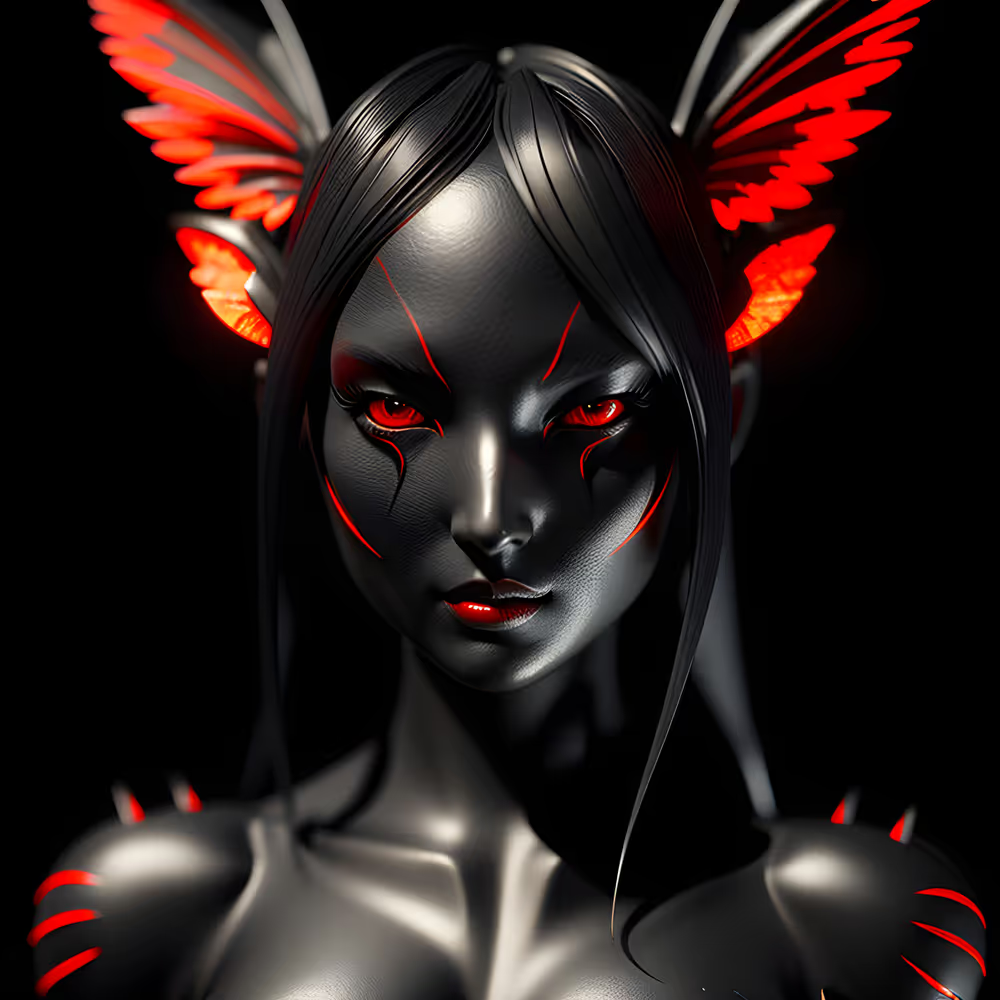
Hel is often depicted as a being with a dual nature, possessing a face that is half alive and half dead, symbolizing her dominion over life and death. This imagery reflects the Norse understanding of death as a natural part of existence rather than a finality. Her name itself is derived from the Old Norse word ‘hellir’, meaning ‘to conceal’, which underscores her role as a keeper of the dead. Hel is also associated with the concept of fate, as she governs the souls that enter her realm, determining their place in the afterlife.
### Cultural Legacy and Influence
The legacy of Hel extends beyond ancient Norse beliefs, influencing later interpretations of death and the afterlife in various cultural contexts. In medieval literature, she is sometimes conflated with Christian concepts of hell, although this is a reinterpretation rather than a direct continuation of her original mythological role. Hel has also appeared in modern media, such as literature and film, often drawing on her complex nature as a goddess of death. However, these portrayals frequently diverge from her original characterization in Norse mythology.
In contemporary discussions of mythology, Hel serves as a reminder of the Norse perspective on death, emphasizing acceptance and the cyclical nature of life. Her figure continues to inspire artistic and literary works, reflecting the enduring fascination with the themes of mortality and the afterlife.
### Conclusion
Hel remains a rich subject of study within Norse mythology, representing the intricate beliefs surrounding death and the afterlife in ancient Scandinavian culture. Her duality and the realm she governs offer profound insights into the Norse worldview, making her a pivotal figure in understanding the complexities of life and death in mythological narratives.