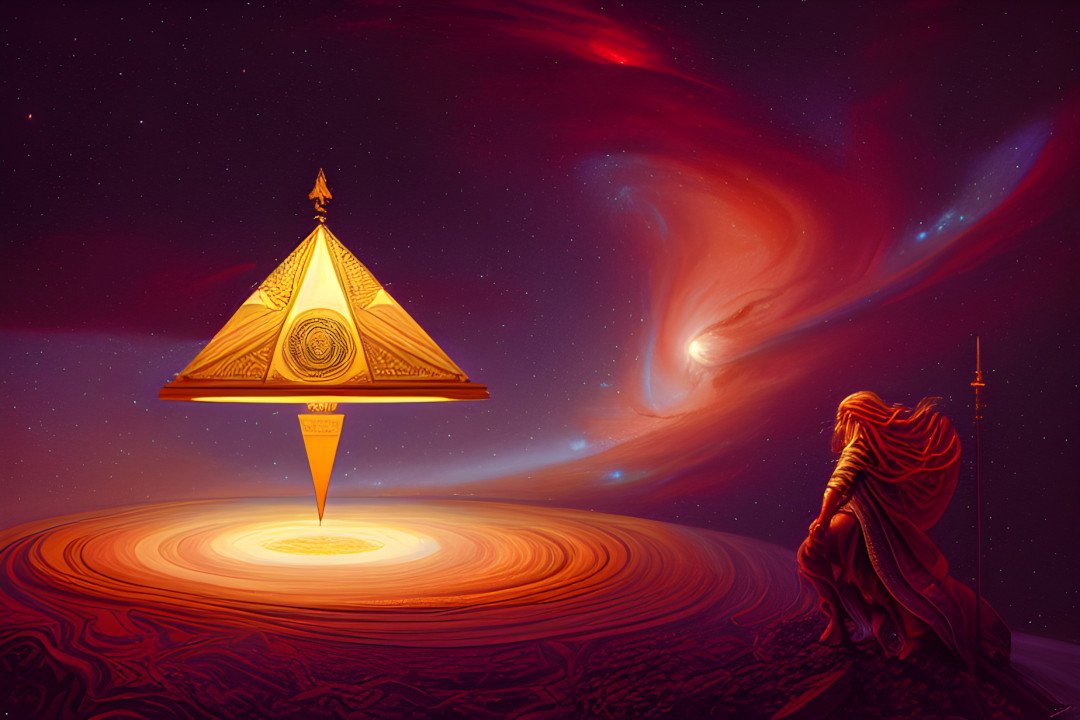
The Dark Goddess: An Unfathomable Presence
The concept of the Dark Goddess transcends simple definitions or categorizations. She embodies a force that eludes explanation, existing in the liminal space where creation meets chaos. Unlike traditional deities, who often embody specific moralities or attributes, the Dark Goddess defies such constraints. She is not simply a figure of darkness; she is the embodiment of the unknown, the primordial essence from which all things emerge.
Darkness as a Source of Creation
In many ancient cultures, darkness was revered as a fertile ground for potentiality. It is within the womb of darkness that ideas gestate, waiting for the moment of illumination. The Dark Goddess symbolizes this paradox: she is both the void and the birthplace of existence. This duality challenges our understanding of good and evil, urging us to reconsider our relationship with the shadows that dwell within and around us.
Names and Their Limitations
The Dark Goddess resists being confined to a single name or identity. In various traditions, she is invoked under different guises—Kali, Lilith, Morrigan, and Hecate, to name a few. However, these names serve more as cultural touchstones than definitive labels. Each name carries its own history and significance, yet none can encapsulate the totality of her essence. To name her is to impose limitations on a being that exists beyond the boundaries of human understanding.
The Dark Feminine: A Misunderstood Archetype
Modern interpretations often misrepresent the Dark Goddess as a mere shadow of the light feminine, suggesting that she is a reflection of trauma or repression. This perspective diminishes her complexity and strength. The Dark Goddess is not a figure in need of healing; she is complete in her own right. She embodies desire, creation, and love without the need for justification or redemption. This reclamation of the Dark Feminine invites us to embrace the full spectrum of existence, including the uncomfortable and the chaotic.
The Resurgence of the Dark Goddess
In contemporary society, where clarity and positivity are often prioritized, the Dark Goddess emerges as a vital counterbalance. Her resurgence is not merely a trend; it is a response to a collective yearning for depth and authenticity. As we navigate a world obsessed with optimization and superficiality, the Dark Goddess reminds us that some aspects of life cannot be quantified or easily understood. She appears in our art, dreams, and unspoken desires, encouraging us to explore the depths of our own consciousness.
A Sacred Presence
Ultimately, the Dark Goddess is not here to save us or provide easy answers. She embodies the complexity of existence, reminding us that divinity can be both harsh and beautiful. To encounter her is to accept that life is not always clear-cut; it is a tapestry woven with shadows and light. In recognizing her presence, we acknowledge that the mysteries of life are not something to be feared but embraced. The Dark Goddess teaches us that sometimes, the mere act of existence is enough.
CONTINUE TO MAIN POST
Embracing the Enigma: The Allure of the Dark Goddess Related Posts
- Heaven in Darkness: The Haunting Imagery of W.A.S.P.’s ‘Heavens Hung in Black’W.A.S.P.'s 'Heavens Hung in Black' delves into the profound depths …
- Embracing the Enigma: The Dark Goddess in Gothic SpiritualityThe Dark Goddess transcends morality, inviting us to explore the …
- In This Moment – “Oh Lord” [Official Video]In This Moment has released the official video for "Oh …