A Heavy First Toll from Melbourne’s Occult Rock Acolytes
Devil Electric’s debut single, Devil’s Bells, arrives as a fully formed statement of purpose. The official audio introduces a band fluent in the language of classic doom and heavy psych, yet intent on carving out its own voice within that lineage. The track leans into minor-key gloom, vintage fuzz, and a sense of ritual atmosphere, all delivered with the focus and confidence of a group that knows exactly where its power lies.
Sound and Style
At its core, Devil’s Bells is built around a slow-burning, mid-tempo riff that favors groove over speed and mood over flash. The guitars carry a dense, saturated crunch that nods to the weight of early heavy metal while maintaining ample clarity in the upper mids. Rather than stacking layers for sheer volume, the arrangement leaves space for the interplay between riff, bass, and voice to breathe. The result is a sound that feels big without bloat, heavy without turning to sludge.
The tonal palette draws from the darker end of 1970s hard rock and the modern wave of occult-doom. Listeners will hear echoes of Sabbathian pacing and blues-rooted fretboard shapes, but the band steers clear of simple pastiche. There is a cinematic undercurrent to the progression, a measured tension that builds in cycles, inviting immersion rather than whiplash. Subtle dynamic swells lift the choruses and refrains, giving the hook an incantatory pull.
Vocals, Lyrics, and Atmosphere
The lead vocal cuts through the mix with a commanding presence, favoring sustained lines and a clean, resonant timbre over grit. Melodic phrases arc above the guitars in a way that heightens the drama without tipping into melodrama. It is a performance that feels rooted in classic rock frontperson craft, deliberate and poised, with carefully placed vibrato and phrasing that plays against the riff’s rhythmic anchors.
Lyrically, Devil’s Bells mines a familiar yet fertile seam of occult imagery. The title itself conjures ceremonial chimes and foreboding omens, and the verses trade in portent and warning rather than gore or shock. Where some contemporary doom opts for nihilistic weight, Devil Electric uses symbolism as an aesthetic framework, hinting at ritual power, temptation, and the magnetism of the forbidden. The language feels archetypal rather than narrative, which suits the single’s hypnotic cadence.
Guitars, Bass, and Drums in Lockstep
The guitar work privileges texture and phrasing. Sustained chords bloom into feedback at the edges, and fills are used sparingly for color, not clutter. The rhythm guitar’s fuzz is thick and harmonically rich, giving the riffs a tactile presence that pairs well with the vocal’s clarity. Lead figures tend to shadow the vocal or slip between phrases, emphasizing mood and motif instead of virtuosic display.
The bass operates as both anchor and counterweight. Its tone sits just gritty enough to speak clearly in the mix, adding heft to the downbeat while filling the space beneath the guitars with a warm, rounded thrum. Lines often double the main riff an octave below, but there are moments where the bass breaks slightly free to push the harmony, deepening the song’s sense of ascent and release.
The drumming is disciplined and spacious. Rather than crowding the pocket with constant fills, the kit work emphasizes feel and dynamic shading. Snare accents land with authority, cymbals are used to widen the stereo field at key transitions, and tom patterns add ritual pulse to key sections. It is playing that demonstrates restraint in service of impact, elevating the arrangement’s ebb and flow.
Production Choices That Serve the Song
Recorded and mixed by Tom Glover at Coloursound Studio in Melbourne, the single bears the hallmarks of a team attentive to detail. The guitars occupy a wide but controlled stereo spread, the vocal is centered and slightly forward without overpowering the ensemble, and the rhythm section retains its low-end punch without muddiness. The overall balance suggests careful mic placement and an ear for harmonics that allows the fuzz to glow rather than smear.
Mastering by Steve Smart at Studios 301 adds final polish and weight. Transients feel natural, the low frequencies translate with confidence, and the top end has just enough air to keep the track from feeling claustrophobic. The end result sits comfortably alongside modern heavy recordings while maintaining a warmth that suits the band’s vintage-leaning aesthetics.
Visual Identity and Aesthetic Continuity
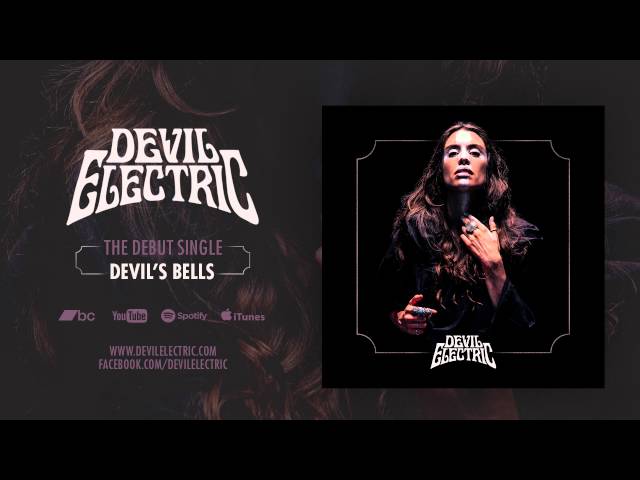
The cover art photography by Wren Steiner aligns with the music’s brooding aura. It frames Devil’s Bells within a visual world of shadow, symbolism, and restraint. Rather than over-explaining the song’s themes, the imagery functions like the music itself, suggesting ritual and mystery through composition and tone. That synergy between sound and image helps position the track as more than a one-off single. It feels like the opening scene of a broader narrative.
Positioning Within Melbourne’s Heavy Underground
Melbourne’s rock and metal scenes continue to be fertile ground for bands exploring the intersection of doom, psych, and classic heavy rock. Devil Electric’s debut fits naturally within that ecosystem, tapping into a lineage that values big riffs, strong hooks, and a tangible sense of atmosphere. The single’s confidence stems not from maximalism but from identity. This is music that knows its references but is far more interested in mood, pacing, and performance than in genre cosplay.
There is also a broader international context. In the wake of renewed interest in occult rock and proto-metal aesthetics, plenty of artists have chased a similar sound. The difference here lies in execution. Devil’s Bells avoids overproduction and gimmickry, letting the song’s central idea carry the weight. That approach, paired with a clear vocal presence and a tight, unfussy arrangement, gives the track longevity beyond initial novelty.
Why Devil’s Bells Lands
The single succeeds because it delivers on the fundamentals: a memorable central riff, a vocal that inhabits the melody with conviction, a rhythm section that understands space, and a production that supports rather than sterilizes. It is the sort of debut that invites repeat listens, not for hidden complexity but for the satisfaction of a song built to last. Each return pass reveals small choices, from the way a chord sustains into the next bar to the tension of a held vocal note, that speak to craft.
For listeners drawn to heavy music that prizes atmosphere as much as impact, Devil’s Bells offers a compelling entry point into Devil Electric’s world. It suggests a band with a clear aesthetic and the discipline to realize it.
Credits
- Artist: Devil Electric
- Track: Devil’s Bells
- Produced by: Devil Electric and Tom Glover
- Recorded and Mixed by: Tom Glover
- Mastered by: Steve Smart, Studios 301
- Recorded at: Coloursound Studio, Melbourne
- Cover Art Photography: Wren Steiner
Availability
Devil’s Bells is available via digital retailers and Bandcamp, accompanied by an official audio release.
Devil Electric – ‘Devil’s Bells’ (Official Audio) Related Posts
- The Dead Daisies live | Rockpalast | 2017The Dead Daisies, an Australian-American hard rock supergroup, delivered a …
- Evil Beauty – The Garden of Shadows | It’s a melancholic yet mesmerizing ode to lost love song"The Garden of Shadows" is a song that evokes a …
- Kamelot – March of Mephisto (Uncensored Version)Kamelot's "March of Mephisto" has been released in an uncensored …
- Belle Margot – Used to Be My Name | a slow-burning blues ballad about the silent heartbreak"Used to Be My Name" is a poignant blues ballad …
- WINDHAND – Diablerie (Official Audio)Windhand has released the official audio for "Diablerie," a track …
- Lament of Empusa | A reinterpretation of the Greek myth of Empusa (Feat Carmina Drevaris)"Lament of Empusa" offers a fresh pop reinterpretation of the …