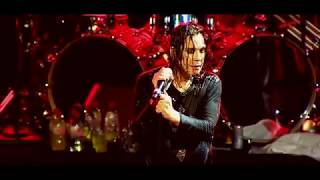
A Hometown Return in 2012
Black Sabbath’s performance of “Paranoid” at the O2 Academy in Birmingham captures a vital moment for the band and for heavy music at large. It was a homecoming set in the city that forged their sound, delivered in an intimate venue more associated with rising acts than legends. In 2012, with the band regrouped around Ozzy Osbourne, Tony Iommi and Geezer Butler, this show put Sabbath face to face with the people who first understood their noise. The performance is taut and unadorned, a study in economy that highlights why “Paranoid” remains one of rock’s essential anthems.
Why “Paranoid” Endures
Released in 1970, “Paranoid” was famously written quickly during recording sessions, yet it distilled Black Sabbath’s defining elements: a hook injected with menace, a riff that balances weight and velocity, and lyrics that frame alienation not as spectacle but as everyday reality. Geezer Butler’s words voice anxiety and isolation with blunt clarity, while Tony Iommi’s riff chases them down with locomotive insistence. It is heavy metal at its most elemental and its most direct, bridging the bluesy churn of late-60s hard rock with a more serrated attack that would influence punk, metal and everything in between. Decades later, the song’s urgency still feels current, and its simplicity leaves nowhere to hide for a live band. That is precisely why performances like this one matter.
Context and Lineup
The Birmingham show arrived at a time of renewed focus for Black Sabbath. With Iommi publicly battling lymphoma earlier in the year, the group limited their appearances but chose to play in their hometown, a decision loaded with symbolism. The lineup featured:
- Ozzy Osbourne – vocals
- Tony Iommi – guitar
- Geezer Butler – bass
- Tommy Clufetos – drums
Original drummer Bill Ward did not participate in the 2012 shows. Clufetos, a forceful live player, stepped in with a straight-ahead, hard-hitting approach that favors clarity and power over swing. The following year would see the release of Sabbath’s studio album 13, a late-career statement that reaffirmed the chemistry between Osbourne, Iommi and Butler. This 2012 performance stands as a bridge between past and present, with the band playing the song that introduced millions to their sound.
Inside the Performance
The O2 Academy’s size works in Sabbath’s favor. The video reveals a band boxed in by proximity rather than set pieces, a setting that spotlights interplay and precision. “Paranoid” arrives fast and clean, a half-minute of suspended tension giving way to the familiar downstroke grind in E that has anchored countless live sets. Iommi’s tone is unmistakable: saturated but not fuzzy, with punch in the mids and just enough grit in the top end to make every pick attack snap. He locks the riff to Butler’s bass line, which growls with compressed focus and a slightly percussive front edge. Together they generate propulsion that feels more like a tightly wound spring than an open-throttle roar.
Clufetos drives the song with a clipped right hand on the hi-hat and a prominent snare crack. His kick pattern underlines the straight eighth-note guitar figure and keeps the tempo brisk. The drumming favors forward motion over embellishment, which suits “Paranoid.” This is not a platform for fills; it is a sprint.
Iommi’s solo here is concise and melodic, built on blues-inflected pentatonic phrases that bend just past the pitch center, then snap back. He does not overplay. The phrasing respects the song’s architecture, raising the temperature without crowding the riff. It is a reminder that his lead voice, for all its ferocity, remains rooted in form and feel.
Ozzy at the Front, Crowd as Choir
Osbourne’s delivery in 2012 leans into cadence and command. He cues the audience, corralling the first verse and chorus into a shared shout. When the lines crest into “I tell you to enjoy life,” the room answers, a Birmingham crowd meeting a Birmingham band on ground they both understand. The performance also shows Osbourne’s knack for space. He rides the riff and gives it air when needed, stepping back to let the instrumental pocket do its work, then re-entering with short, emphatic lines that keep the energy high. His role is both vocalist and conductor, folding the audience into the arrangement without turning the song into a call-and-response exercise.
Guitar, Bass and Drums in Focus
What hits hardest in this video is the completeness of Sabbath’s core trio. Butler moves like a second guitarist, hybridizing rhythm and low-end weight to make the band sound larger than four people on a relatively small stage. His lines are not mere doubling; at key moments he tugs against the guitar figure to create tension, then snaps back tight for the refrain. Iommi’s right hand is relentless, and his left writes in controlled slides and half-step grinds that impart menace without theatrics.
Clufetos keeps accents crisp. The snare is tuned high enough to cut, and the cymbal work is restrained. He opens the hats slightly in the chorus to widen the image, then clamps down again to push the verses forward. The drum sound is modern in definition but classic in placement, with kick and bass sharing space without smearing.
Capturing the Moment on Video
The official video is shot and edited for dynamics rather than spectacle. Close-ups of Iommi’s right hand and fretboard speak to the riff’s physicality. The camera lingers on Butler’s picking just long enough to register his attack and string muting, small details that matter when a song lives or dies on economy. Osbourne is framed as ringleader, often in three-quarter angles that catch both his movement and the front rows’ response. The mix favors clarity, allowing the riff to dominate without burying the vocal, and it retains enough room sound to preserve the crowd’s presence. The cut avoids gimmicks and doesn’t rush, trusting the song’s internal momentum to carry the viewer through.
Meaning in a Hometown Performance
Hearing “Paranoid” in Birmingham resonates beyond nostalgia. Sabbath’s early music absorbed the city’s industrial rhythm and postwar grit, and this performance underscores that lineage. With Iommi returning to the stage amid ongoing treatment, the set takes on a tone of resolve. Nothing in the arrangement is softened, nothing inflated. It is the sound of a band choosing directness over ceremony, reaffirming their identity in the place that shaped it.
Legacy and Afterglow
“Paranoid” remains the gateway for new listeners and a final word for long-time fans. Played near the end of a set, it functions like a thesis restated: heavy music can be concise, tuneful and immediate without losing its bite. The Birmingham 2012 rendition makes that case with clarity. It is the work of musicians who understand that longevity rests not only on reinvention, but on reengagement with foundational material, performed with intent.
Half a century after its release, the song’s questions about dislocation and pressure still ring out. In this video, they do so in the right room, in front of the right crowd, powered by the right riff. For Black Sabbath, “Paranoid” is not just a closer. It is the throughline, unbroken from 1970 to 2012 and beyond.
BLACK SABBATH – “Paranoid” Birmingham 2012 (Live Video) Related Posts
- dArtagnan – We’re gonna be drinking ft. Candice Night, Blackmore’s NightdArtagnan has released their latest single, "We're Gonna Be Drinking," …
- ZZ Top – Gimme All Your Lovin’ (Official Music Video)The official music video for ZZ Top's "Gimme All Your …
- Queens Of The Stone Age – Go With The Flow (Official Music Video)The official music video for "Go With The Flow" by …
- Johnny Cash – HurtThe official music video for Johnny Cash's "Hurt" has been …
- BEYOND THE BLACK – Is There Anybody Out There? (OFFICIAL MUSIC VIDEO)Beyond The Black has released their official music video for …
- ENTROPY | by End Of Silence (Ft. Alexa Ray)The article highlights the collaboration between End Of Silence and …