A Vintage Snapshot of Heavy Metal’s Formative Years
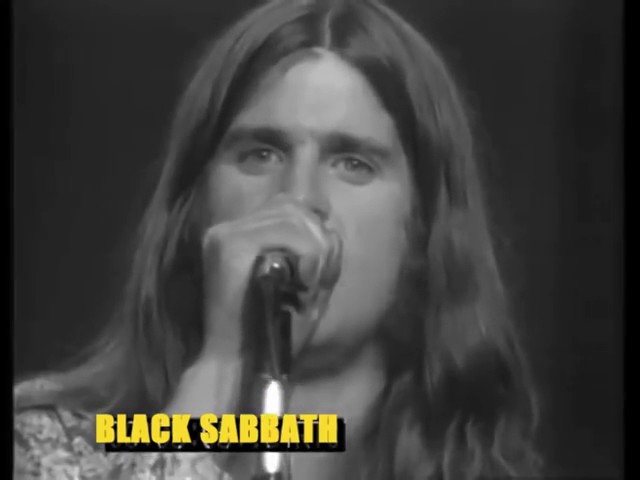
The official video for Black Sabbath’s Killing Yourself To Live pairs the original studio recording with archival performance footage captured at the Santa Monica Civic Auditorium in 1975. The result is a vivid window into the band’s mid-70s onstage ferocity, set against one of the most uncompromising songs from their classic period. It is not a typical performance clip. Instead, it is a document of the era’s scale and intensity, spliced to the razor-edged precision of the album track, and it underscores how Black Sabbath translated intricate, heavy studio work into a towering live presence.
Origins on Sabbath Bloody Sabbath
Killing Yourself To Live first appeared on the band’s fifth studio album, Sabbath Bloody Sabbath, released in 1973. That record marked a turning point for Black Sabbath, who were expanding their sonic palette with broader arrangements and a more progressive sense of dynamics. While the album introduced new textures and atmospheric detours, Killing Yourself To Live stood out as a direct, riff-forward statement. It kept the band’s core power intact, while shifting through multiple sections that hinted at the widening horizons of heavy music in the decade to come.
Sound, Structure and the Mechanics of Weight
At the heart of the song is Tony Iommi’s command of riff architecture. The opening figure rides on a thick, minor-key progression that feels both grounded and urgent, establishing a bedrock for the sections that follow. Rather than settle into a single groove, the track pivots through tempo changes, cutaways and rhythmic swerves that keep tension high without sacrificing flow.
- Guitar: Iommi’s guitars are double-tracked for heft, with a biting tone that favors saturated mids and a focused attack. His lead breaks arrive with melodic clarity, stitching together blues phrasing and chromatic runs that hint at the band’s darker harmonic language.
- Bass: Geezer Butler’s bass lines do more than mirror the guitar. They snake between the kick drum and riff, pushing momentum forward, adding a warped, elastic quality that gives the arrangement its perpetual lift.
- Drums: Bill Ward moves from tight, almost martial beats to rolling tom fills and cymbal surges. He injects a restless, improvisational spirit into the song’s architecture, driving the transitions that define its character.
- Vocals: Ozzy Osbourne’s delivery is unadorned and pointed, cutting through the mix with a clear urgency. He centers the track’s narrative while leaving space for the instrumental shifts to carry emotional weight.
The composition’s multi-part layout foreshadows the evolution of heavy metal’s structures later in the decade, as it moves from stalking mid-tempo sections into faster, almost sprinting passages. It is not simply a showcase for volume. It is an exercise in how heaviness can be engineered through contrast and arrangement.
Themes of Strain and Survival
Lyrically, Killing Yourself To Live examines self-destruction and the cost of excess with a cool, observational tone. The title’s paradox frames the song as a critique of cycles that promise freedom but erode it instead. Though the band often cloaked social commentary in a stark, impressionistic language, the lines here feel sharper and more direct, reflecting the pressures and temptations surrounding rock life in the early 1970s. There is no sermonizing, only a bracing assessment of choices that lead to diminishing returns.
1975 at the Santa Monica Civic
The footage used in the official video situates Black Sabbath in 1975, when the group was deep into a period of creative productivity and relentless touring. The Santa Monica Civic Auditorium, a major West Coast stage of the era, provides a cinematic backdrop: banks of lights, a mass of amplifiers, and a crowd tuned to every downstroke and drum accent. Even without synced live audio, the imagery conveys the group’s command of dynamics and pacing. The way Ward’s sticks blur in fills, the controlled economy of Iommi’s picking hand, Butler’s relentless right hand, and Osbourne’s kinetic presence at center stage capture the physical grammar of heavy music as it was being codified.
The editorial choice to keep the studio track intact emphasizes the precision of the original recording while allowing the camera work to tell a parallel story. We see the band as a single organism, locked in a push-pull between weight and motion, an effect heightened by close-ups that linger on the interplay between rhythm section and guitar.
From Studio Detail to Stage Impact
What stands out in this pairing is how faithfully the song’s inner mechanics translate visually. The video’s quick cuts mirror the arrangement’s sectional pivots, underscoring the shifts between menacing groove and uptempo charge. The staging details speak to the band’s minimalist efficiency: no elaborate theatrics, just performance calibrated for impact. In 1975, before arena shows regularized choreographed spectacle, Black Sabbath relied on timing, tone and collective discipline to push crowds into a sustained boil. The footage captures that ethos with clarity.
Position in the Sabbath Canon
Within the Black Sabbath catalogue, Killing Yourself To Live has a particular resonance. It encapsulates the period when the group broadened its compositional reach without abandoning the forbidding mood that defined their early work. The song’s construction would echo through later generations of heavy music, from the propulsion of speed metal to the sectional storytelling of progressive metal. It is a bridge piece: rooted in blues-damaged hard rock, looking ahead to a heavier, more structurally adventurous future.
Lineup and Credits
The recording of Killing Yourself To Live is credited to the classic lineup:
- Ozzy Osbourne – vocals
- Tony Iommi – guitars
- Geezer Butler – bass
- Bill Ward – drums
Originally released on Sabbath Bloody Sabbath in 1973, the song is credited to Black Sabbath as writers.
Why This Clip Endures
The video offers more than nostalgia. It functions as a study in how a band at its peak aligns writing, tone and physical performance. By anchoring the visual story in 1975 and the audio in 1973, it draws a line through a crucial stretch in the group’s evolution, when Black Sabbath tightened its craft while pushing boundaries. Killing Yourself To Live remains a stark dispatch from that moment, and this official video gives it the frame it deserves: immediate, unadorned and indelible.
BLACK SABBATH – Killing Yourself To Live (Official Video) Related Posts
- Metallica: One (Clisson, France – June 26, 2022)Metallica performed at Hellfest in Clisson, France, on June 26, …
- Amanda Somerville’s Trillium – “Shards” (Lyric Video)Amanda Somerville's project Trillium has released a lyric video for …
- Heaven’s On Fire"Heaven's On Fire" is a notable track by the black …
- Toccata and Fugue – by J.S. Bach (Heavy Rock Version)The heavy rock adaptation of J.S. Bach's "Toccata and Fugue," …
- The Dark Element – “Not Your Monster” (Official Music Video)The Dark Element, featuring Anette Olzon and Jani Liimatainen, has …
- Lynyrd Skynyrd – Simple Man – Live At The Florida Theatre / 2015 (Official Video)Lynyrd Skynyrd recently showcased their iconic albums "Pronounced 'Lĕh-'nérd 'Skin-'nérd" …