The Song at Full Throttle
Highway Star stands as one of Deep Purple’s definitive statements, the ignition spark of their 1972 album Machine Head and a distillation of everything the classic Mark II lineup did at the highest level. In period footage from 1972, the song arrives with urgent clarity, pushing a relentless hard rock engine that many listeners and musicians would come to cite as a blueprint for speed and power metal. It is a celebration of precision and excess, a showcase for ensemble chemistry, and a masterclass in how to make virtuosity serve a song.
Origins and 1972 Context
By 1972 Deep Purple had become a dominant force in heavy rock, carving a singular path alongside the likes of Black Sabbath and Led Zeppelin. Highway Star emerged during a prolific phase. The band refined it while touring, then captured the studio version for Machine Head, recorded with the Rolling Stones Mobile in Montreux, Switzerland. The album’s sessions are now the stuff of rock folklore, and Highway Star, opening the record, set the tone with ruthless focus and a locked-in band performance that reflected how road-tight the group had become.
Composition and Arrangement
Highway Star is meticulously structured for impact. A fanfare-like introduction brings guitar and organ into sharp unison before the main riff grips hold with a straight-ahead, high-tempo drive. Verses ride that insistent riff while pre-chorus figures build tension that snaps into the chant-worthy chorus. The arrangement highlights shifting layers of power, from the rhythm section’s machine-line precision to the spotlight handoffs between organ and guitar.
Two extended instrumental breaks define the middle of the song. Jon Lord’s organ solo arrives first, full of classically inflected motifs and rapid scalar runs shaped by his signature overdriven Hammond tone. Ritchie Blackmore follows with a guitar solo that is carefully composed, moving through arpeggios, sequences and melodic fragments that build in intensity. Both solos nod to Baroque architecture without ever losing the grit and immediacy of hard rock.
Instrumental Firepower
Guitar: Blackmore’s tone is razor-edged yet articulate, the product of a light touch and fierce right-hand discipline. His solo is not a string of licks, it is a rising narrative built from classical ideas and rock phrasing, moving from tightly picked lines to soaring high-register climaxes. During the verses he alternates power-chord muscle with rhythmic accents that enhance the vocal cadence.
Keyboards: Lord’s Hammond organ, driven into distortion through roaring amplifiers, functions as both rhythm and lead instrument. His comping shadows the guitar, reinforcing the song’s unison lines, while his solo bursts forward with a biting attack and a keen sense of thematic development. Drawbar shifts and percussive key strikes give his lines a vocal quality that cuts through the full band mix.
Rhythm Section: Ian Paice propels the entire arrangement with laser-precise snare work, crisp cymbal articulation and smartly placed tom flourishes. The part is busy without being fussy, constantly feeding momentum into the riff. Roger Glover’s bass anchors the harmony and locks tightly with the kick drum, adding melodic movement that reinforces the chordal spine and keeps the low end agile rather than blunt.
Lyrical Themes and Delivery
The lyrics embrace classic rock iconography, using the automobile as both literal speed machine and avatar of freedom and desire. It is a song about motion, ownership and the thrill of mastery. Ian Gillan’s vocal performance carries the narrative with athletic control, moving from taut verse lines to an emphatic, open-throated chorus. His upper-register force amplifies the sensation of velocity baked into the music.
Onstage in 1972: What the Video Captures
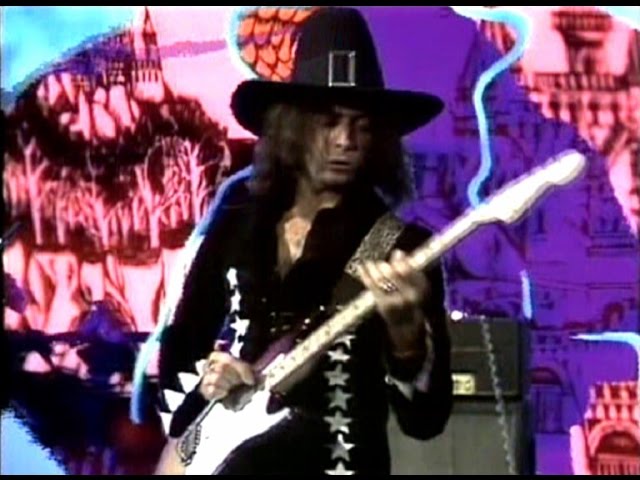
High-quality footage from 1972 shows a band fully in command, translating studio precision into live ferocity. You can see the interplay that defined Deep Purple’s stagecraft. Blackmore and Lord trade looks and phrases during the instrumental sections, often moving in unison before spiraling off into their respective solos. Gillan fronts the performance with unfussy charisma, while Paice and Glover keep the pulse unwavering. The camera lingers on hands and faces at just the right moments, highlighting technique but never losing the collective surge that makes the song work.
- Watch how the guitar and organ double lines in the intro, then separate to create stereo-like tension in the mid-song breaks.
- Listen for Paice’s subtle ghost notes and accents on the snare, which keep the groove nimble at high speed.
- Notice how Glover’s bass anticipates chord changes, guiding the band through transitions with melodic economy.
Sound and Production Notes
Machine Head’s sound is clean yet hot, revealing the bite of each instrument while preserving the weight of the ensemble. Highway Star benefits from that balance. The organ and guitar occupy distinct frequency lanes, so the solos feel expansive without overshadowing the rhythm section. The mix frames Gillan’s voice clearly above the band, allowing lyrics and dynamics to register even during the most intense passages.
Enduring Impact
Highway Star remains a live cornerstone for Deep Purple and a reference point for generations of rock and metal musicians. Its combination of speed, structure and virtuosic soloing helped codify a language that would echo through hard rock, early metal and later strands of power and speed metal. More than a showcase of chops, it models how tightly arranged parts and disciplined performances can produce music that is immediate, catchy and enduringly heavy.
Personnel
- Ritchie Blackmore – Guitar
- Jon Lord – Keyboards, organ
- Ian Paice – Drums
- Ian Gillan – Vocals
- Roger Glover – Bass guitar
Additional Credit
Mix by N.Z
Deep Purple – Highway Star 1972 Related Posts
- Within Temptation – Deceiver of Fools (Live)Within Temptation's "Deceiver of Fools" live performance, featured on the …
- Motörhead Hellraiser (30th Anniversary – Official Animated Video)The 30th anniversary edition of "Hellraiser," featuring Ozzy Osbourne and …
- BEAST IN BLACK – Blade Runner (OFFICIAL MUSIC VIDEO)The official music video for "Blade Runner," a track from …