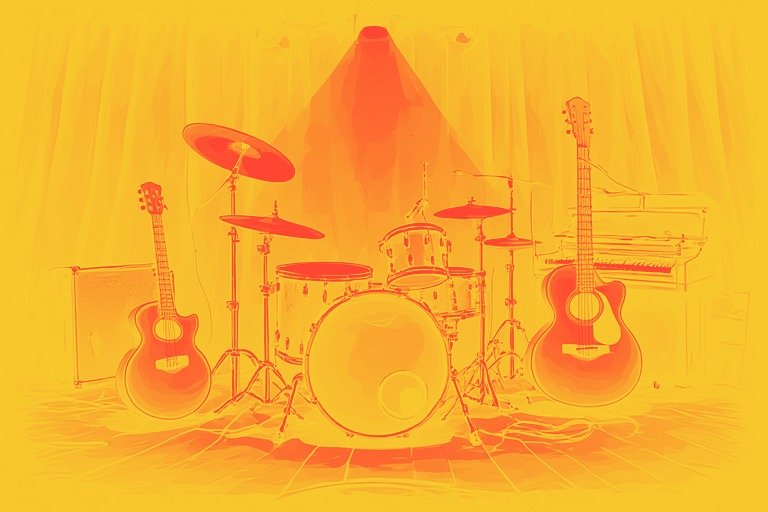
The Symbol of Infinity in Sound
In the vast landscape of music, the concept of the Ouroboros—a serpent devouring its own tail—serves as a profound metaphor for the cyclical nature of creativity. Just as the serpent symbolizes eternity and the unending cycle of life, music too embodies a continuous loop of inspiration, innovation, and rebirth. Artists often draw from the well of their predecessors, reinterpreting and reinventing sounds that have shaped the very fabric of musical history. This cyclical process reflects the essence of the Ouroboros, where each generation of musicians feeds into the next, creating a rich tapestry of sound that transcends time.
Rebirth Through Collaboration
Collaboration in music can be seen as a manifestation of the Ouroboros. When musicians come together, they create something entirely new while simultaneously honoring their individual influences. This synergy can lead to groundbreaking genres and styles, as seen in the fusion of jazz and hip-hop or the blending of traditional folk with modern electronic music. Each collaboration acts as a moment of rebirth, where the artists involved contribute their unique perspectives, resulting in a sound that is both familiar and innovative. The Ouroboros here symbolizes the beauty of collective creativity, where the end of one musical journey becomes the beginning of another.
Controversies and Cultural Impact
Throughout music history, the Ouroboros has often sparked debates about originality and authenticity. Critics argue that the constant recycling of ideas can lead to a stagnation of creativity, while others celebrate it as a testament to the interconnectedness of musical expression. This tension highlights a crucial aspect of the Ouroboros: the balance between honoring the past and forging new paths. The cultural impact of this cycle is undeniable; iconic artists have often drawn inspiration from ancient sounds, leading to a resurgence of interest in traditional music forms, thereby creating a bridge between generations.
Symbolism in Lyrics and Artistry
Many musicians have embraced the symbolism of the Ouroboros in their lyrics and visual art. The imagery of the serpent eating its tail can represent the struggles and triumphs of the creative process, echoing themes of self-destruction and renewal. Artists like Björk and Tool have incorporated this motif into their work, using it to explore complex emotional landscapes and philosophical questions about existence and identity. Such symbolic interpretations invite listeners to reflect on their own cycles of creation and destruction, fostering a deeper connection with the music.
Conclusion: Embracing the Cycle
As we explore the music of today, it becomes evident that the Ouroboros is more than just an ancient symbol; it is a living, breathing representation of the artistic journey. The eternal cycle of creation and rebirth is woven into the very fabric of music, reminding us that every note played and every lyric sung is part of a larger narrative. Embracing this cycle allows artists and listeners alike to appreciate the interconnectedness of sound, history, and culture, ultimately celebrating the infinite possibilities that lie within the world of music. In this way, the Ouroboros continues to inspire, challenge, and unite us through the universal language of sound.
CONTINUE TO MAIN POST
The Ouroboros in Music: An Eternal Cycle of Creation and Influence Related Posts
- The Ouroboros of Sound: Exploring the Eternal Cycle in MusicExplore the connection between the Ouroboros symbol and the cyclical …
- The Ouroboros in Music: A Symbol of Cycles and CreativityExplore how the ancient symbol of the Ouroboros influences music, …
- OuroborosExplore the eternal cycle of creation and rebirth with our …