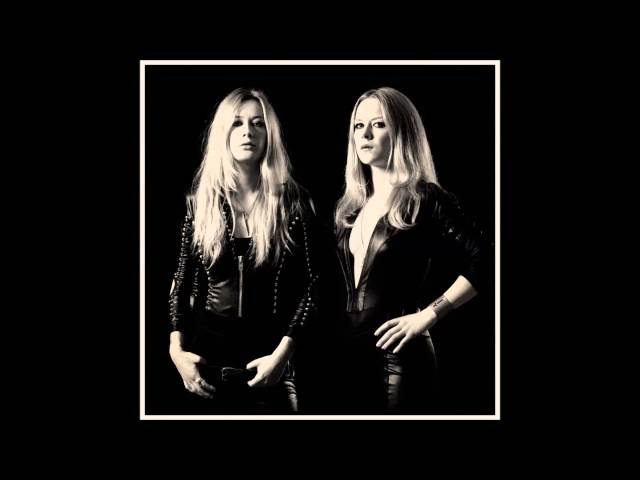
Occult Metal Poise, Cast in 2014
The Oath’s self-titled 2014 full-length stands as a concise, forceful statement from a band that arrived fully formed and departed just as swiftly. Across its compact running time, the album balances classic heavy metal bravado, minor-key melodicism, and a spectral mood that places it squarely within the early 2010s resurgence of occult-flavored hard rock. It is the group’s sole studio album, and its economy of ideas is part of its power: every riff, cadence, and chorus feels sharpened to a point.
Release Context and Lineup
Issued in 2014, the album captures the core creative chemistry between vocalist Johanna Sadonis and guitarist Linnéa Olsson. They are joined by bassist Leo Smee and drummer Andrew Prestidge, whose rhythm section gives the songs weight and momentum without blunting their melodic edge. The record emerged alongside a wave of contemporary bands revisiting classic forms through a darker lens, yet The Oath maintained a distinct identity, favoring urgent songcraft over retro pastiche.
Personnel
- Johanna Sadonis – Vocals
- Linnéa Olsson – Guitar
- Leo Smee – Bass
- Andrew Prestidge – Drums
Past members:
- Vincent Wager – Drums
- Simon Bouteloup – Bass
Sound: Classic Forms With a Nightshade Glow
The Oath moves with the clipped swagger of late 1970s and early 1980s heavy metal, yet its tonal palette is steeped in midnight hues. Riffs revolve around minor keys, triads, and harmonized motifs, trading between chugging verses and gleaming, melodic choruses. The guitar tone is articulate rather than saturated, which lets the rhythmic precision and the harmonic details breathe. There is a satisfying blend of gallop and swing: when the tempos kick up, the feeling is brisk and urgent; when the band throttles back, it leans into doom-laced grandeur without losing definition.
Underpinning the guitar work, bass lines are notably present and purposeful, often shadowing root motion before branching into counter-melodies that lift turns of phrase. Drums favor crisp snare articulation, nimble tom patterns, and ride cymbal figures that tether the music to a classic metal pulse. The combination summons a lineage extending from early Sabbath and Priest through the more arcane corners of the New Wave of British Heavy Metal, while keeping melodies front and center.
Vocal Presence and Melodic Identity
Johanna Sadonis anchors the album with a voice that is both declarative and tuneful. Rather than relying on histrionics, she leans into phrasing and timbre, shaping lyrics with an even, focused delivery. Her choruses carry a chant-like inevitability, and the verses often pivot on carefully placed inflections that reinforce the songs’ narrative arcs. The vocal lines entwine with guitar themes, creating a call-and-response effect that heightens the album’s melodic identity.
Lyrical Atmosphere and Themes
While the record fits the occult rock tag, its imagery favors suggestion over spectacle. The lyrics dwell on fatalism, initiation, rupture, and resolve, tracing silhouettes of night journeys, broken pacts, and steel-tinged perseverance. There is a tension between shadow and uplift that keeps the material from collapsing into gloom. Moments of yearning are answered by statements of intent, and even the darker passages feel animated by a desire to move forward rather than linger in dread.
Musicianship Highlights
- Riffs with contour: The album’s riffcraft emphasizes shape and motion: quick hammer-on figures give way to sliding power chords, and transitional licks frequently unfold into harmonized leads that double as hooks.
- Dynamic drumming: Prestidge shifts from tight, martial beats to swinging half-time bridges with ease. Subtle ghost notes and tom accents add dimension without clutter.
- Melodic bass: Smee’s lines track the guitar while carving their own arcs in pre-choruses and turnarounds, thickening the harmony and lending the music a warm, analog feel.
- Economical solos: Olsson’s lead breaks are concise, built on lyrical bends and modal runs that speak to song rather than sport, often setting up a vocal re-entry with heightened drama.
Production and Aesthetic Choices
The production favors clarity and immediacy. Guitars sit forward without blotting out the rhythm section, the drums register naturally in the room, and the bass remains audible even in denser choruses. Effects are used sparingly: occasional reverb lends atmosphere, while the overall mix preserves an on-the-floor directness that suits the band’s concise writing. The result feels timeless rather than retro, modernizing classic textures with precise balances.
Position Within the 2010s Underground
The Oath arrived during a fertile period for heavy rock and metal that prized craft and mood as much as aggression. Among contemporaries who explored arcane aesthetics and melodic power, this album distinguished itself through its compact structures and songwriting discipline. It honors foundations built by proto-metal and NWOBHM while rejecting bloat. In doing so, it contributed a pointed, memorable voice to the era’s broader occult metal conversation.
Enduring Appeal
Part of the record’s staying power lies in its balance. It is heavy but tuneful, shadowy yet clear, familiar without feeling derivative. The songs invite repeat listens by revealing the small parts that make them move: a quick rhythmic feint before a chorus, a consonant harmony slipping into dissonance at a line’s end, a bass figure threading a path between drums and guitar. For listeners drawn to sharp hooks, vintage-leaning sonics, and a cohesive atmosphere, The Oath remains a self-contained gem from a brief, striking chapter in modern heavy music.
The Oath – The oath (2014) Full Album Related Posts
- Greta Van Fleet Candlelight Sessions – Broken Bells (Live)Greta Van Fleet has released a live performance of "Broken …
- Three Days Grace – I Am The Weapon (Official Video)Three Days Grace has released the official video for their …
- Sepultura – Territory [OFFICIAL VIDEO]Sepultura's official video for "Territory," featured on their album Chaos …
- AC/DC – For Those About To Rock (We Salute You); by The Iron CrossThe Iron Cross band pays tribute to AC/DC with their …
- HORISONT – Writing on the Wall (OFFICIAL VIDEO)The official video for "Writing on the Wall" by Horisont …
- BROTHERS OF METAL – Chain Breaker (2021) // Official Music Video // AFM RecordsThe official music video for "Chain Breaker" by Brothers of …