
A Stark, Pulsing Vision from The Tipping Point Era
Tears For Fears channel a harder, steelier edge with My Demons, one of the most propulsive moments from their 2022 album The Tipping Point. The official music video, directed by Heather Gildroy, translates the track’s obsessive pulse into movement and texture, rendering a portrait of paranoia, compulsion and fraught modernity. For a duo whose songwriting once mapped the psychology of fear and release, My Demons revisits those concerns in a contemporary register, where surveillance, information overload and emotional numbness press against the need for contact.
Sound and Arrangement: Dark Synths, Metallic Groove
My Demons is built on a taut, mechanized groove that nods to industrial and dark synth-pop while retaining the duo’s melodic instincts. A distorted bass synth drives the verses with a clipped, percussive gait. The drums strike with a martial regularity, all tight snares and hard-gated kicks that feel engineered rather than organic. Against that chassis, the track layers serrated synth stabs and filtered pads that open and close like shutters, creating a sense of looming threat.
The vocal production is pointed and intimate. Verses are delivered with a near-spoken cadence, the phrasing sharpened to match the lyric’s conspiratorial imagery. In the chorus, harmonies widen the frame without softening it, a classic Tears For Fears tactic used here as contrast rather than comfort. There are flashes of guitar grit tucked into the sides of the mix, more texture than lead, while modulation effects give the bridge a destabilized, vertiginous feel before the hook reasserts the track’s heavy stride. It is precise and unblinking, a song engineered to push forward and rarely exhale.
Lyrics: Surveillance, Disaffection and the Need for Touch
The lyric sheet draws a diagram of modern dread. References to satellites and misspelled neon hint at a world that monitors and distorts in equal measure. Lines like “these human hands need a human touch” cut through the mechanized mood, revealing a humanist center inside the circuitry. Phrases such as “first world thinkers behind the blinkers” and “the hand that always tinkers with the bullet and the vest” layer social critique over personal unease, casting a wary eye on complacency and control.
The refrain is memorable not just for its cadence but for its paradox: demons that “don’t get out that much” imply both suppression and inevitability. The bridge’s chant-like questions, “What a man to do? What a man to trust?” arrive like a diagnostic test of fractured belonging. Throughout, the words operate on two frequencies, the inner and the civic, a hallmark of the band’s best writing dating back to their earliest explorations of fear and agency.
The Video: Movement as Metaphor
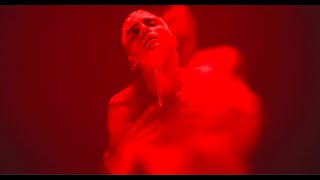
Heather Gildroy’s direction centers choreography rather than conventional performance footage, a choice that suits the song’s clenched energy. Dancer and choreographer Ed Monro translates the track’s tension into physical language that ricochets between rigid, angular isolations and sudden releases. The body becomes a conduit for the lyric’s themes, toggling between control and frenzy, precision and collapse, as if trying to outrun the very signal that animates it.
Chris Hadland’s cinematography leverages stark lighting and close framing to heighten that sense of confinement. Hard-edged beams slice the space into geometric planes, while swift reframing and cuts punctuate the beat. VFX and cymatics elements, guided by Justin Hopkins, surface intermittently like ghosted data, a visual analog to the song’s electronic textures. The overall palette is severe and utilitarian, less about spectacle than about transmitting an atmosphere of watchfulness and compression.
Performance Focus: Bodies, Not Backstory
The clip resists narrative exposition. Instead, it trusts gesture, rhythm and texture to carry meaning. Monro’s choreography drives the encounter, the camera tracking with a documentary calm that lets each contortion and stutter land with weight. Editor Beau Cassidy shapes these movements into phrases that echo the song’s structure, reserving accelerations for chorus hits and allowing fragments of stillness to bloom in the bridge before the machinery cranks again. The result is a study in embodiment that places the listener inside the pressure chamber of the track.
Within The Tipping Point: A Harder Contour
As part of The Tipping Point, My Demons provides a necessary counterweight to the album’s reflective passages. Where some tracks lean into widescreen balladry and layered acoustic warmth, this one sharpens the album’s silhouette with muscular electronics and clamp-tight rhythm. It underscores the record’s central tension between vulnerability and vigilance, asking what softness can survive in a hardening world. The juxtaposition enriches the album’s pacing and underlines the breadth of the duo’s palette after decades of evolution.
Production and Creative Team
- Director: Heather Gildroy
- Creative Director: Dilly Gent
- Production Company: Son&Heir
- Producer: Josiah Bultema
- Director of Photography: Chris Hadland
- Gaffer: Jorge Hernandez
- Assistant Camera: Zackery Ramos-Taylor
- Production Assistant: Desmond Asiedu
- Editor: Beau Cassidy
- Cymatics, VFX and Post Production Director: Justin Hopkins
- Dancer and Choreographer: Ed Monro
Key Listening and Viewing Moments
- The opening bars, where the distorted bass synth snaps the tempo into a strict grid and sets the track’s predatory gait.
- The first chorus entrance, when harmonies flare wider but the drum programming stays clenched, enhancing the song’s push-pull.
- The bridge with its mantra-like questions, accompanied by a slight thinning of the arrangement that primes the final surge.
- Choreographic pivots that mirror the song’s structure, particularly the quickfire isolations aligned to snare accents and the brief, breathlike expansions during the chorus.
- Cymatic and glitch motifs that ripple at transition points, hinting at signals pulsing beyond the visible frame.
Why It Lands Now
My Demons resonates because it refuses to sentimentalize anxiety. The track accepts the modern condition as a terrain of signals, alerts and veiled power, then insists on the irreducible need for touch and trust within it. That duality, rendered through a muscular electronic production and a video steeped in visceral movement, feels both timely and unmistakably Tears For Fears. It is the sound of veteran songwriters who still know how to turn private unrest into something communal and electric, and it stands as one of The Tipping Point’s most immediate jolts.
Tears For Fears – My Demons (Official Music Video) Related Posts
- Motionless In White – America (Official Video)The official music video for "America" by Motionless In White, …
- EPICA – Run for a Fall (We Will Take You With Us) (OFFICIAL LIVE VIDEO)EPICA's "Run for a Fall" is featured in their upcoming …
- Seraphine Valk – Forged in the Heart of Yggdrasil | The World Tree of Norse mythology (Music Video)The music video "Forged in the Heart of Yggdrasil" draws …
- ORCHID – Sign Of The Witch (OFFICIAL TRACK AND LYRIC VIDEO)ORCHID has released the title track from their upcoming album …
- WIND ROSE – Drunken Dwarves (Official Video)The official video for "Drunken Dwarves" by WIND ROSE showcases …
- NIGHTWISH – The Greatest Show on Earth (with Richard Dawkins) (OFFICIAL LIVE)The live performance of "The Greatest Show on Earth" by …