Power Metal Meets the Battle of the Atlantic
Sabaton’s “Wolfpack,” drawn from the band’s 2005 breakthrough album Primo Victoria, channels the relentless tension of the Battle of the Atlantic into a compact, hard-driving power metal anthem. Built on a foundation of galloping riffs, martial percussion and commanding vocals, the song narrows its focus to the German U-boat “wolfpack” tactic that stalked Allied convoys. It’s a signature Sabaton approach: historical specificity rendered with hook-laden immediacy.
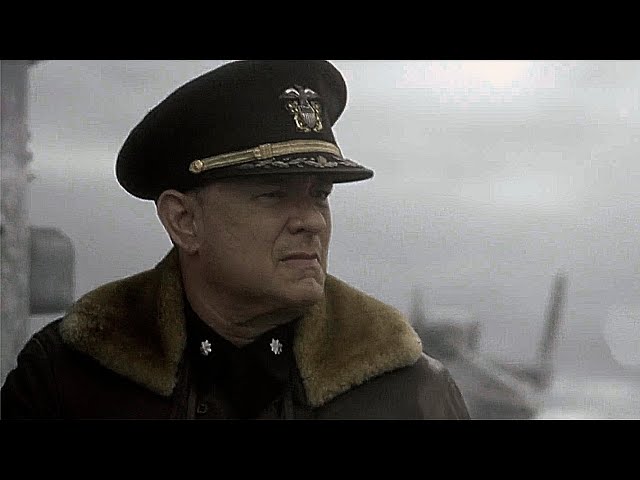
Paired here with on-screen subtitles and imagery associated with the 2020 film Greyhound, “Wolfpack” takes on an intensified cinematic charge. The film, inspired by C. S. Forester’s naval fiction and led by Tom Hanks, dramatizes the precarious calculus of escort duty in hostile waters. Although there is no official connection between the band and the movie’s soundtrack, the thematic alignment is striking. Subtitled lyrics bring the narrative to the surface, underscoring how Sabaton folds research, storytelling and accessible songwriting into one cohesive surge.
Concept and Historical Frame
Sabaton has long staked out a singular lane within heavy music, using military history as source material while avoiding triumphalism. “Wolfpack” zeroes in on the coordinated submarine attacks that defined the Atlantic theatre’s most perilous months. In practice, U-boat groups shadowed convoys by night, relaying positions by radio and converging for multi-submarine strikes intended to overwhelm escorts and scatter merchant ships.
The song’s perspective is observational rather than propagandistic. Its language evokes periscopes cutting through swell, torpedoes running true, and the stark arithmetic of tonnage and loss. By focusing on the tactics rather than the politics, Sabaton invites listeners to consider the cat-and-mouse mechanics of a prolonged maritime campaign that determined whether Britain and later the broader Allied war effort could be supplied at all.
Songwriting, Sound and Structure
“Wolfpack” exemplifies Sabaton’s early formula, which marries classic European power metal to a cinematic sense of scale:
- Riffs and Harmony: Twin-guitar figures drive the verses with tight, palm-muted patterns that mimic sonar blips and periscope sweeps. Choruses open into broader harmonized leads, a release valve after the song’s clenched narrative verses.
- Rhythm Section: Double-kick drums anchor the pacing without descending into speed for its own sake. The groove surges like a ship straining against heavy weather, with fills that resemble depth charges puncturing the flow.
- Keyboards and Atmosphere: Subtle but insistent keys trace the melodic spine and add a glassy sheen that reads like cold moonlight on open water. Synth accents function as both hook and texture, nodding to the genre’s symphonic tendencies.
- Vocals and Delivery: Joakim Brodén’s baritone cuts through the arrangement with clipped phrasing that emphasizes logistics, coordinates and tactical maneuvers. The choruses pivot into stacked gang vocals, suggesting both crew cohesion and the swarm logic of multiple submarines attacking in concert.
- Arrangement: Verses build in short, pressurized bursts, pre-choruses tighten the screws with rising chords, and the chorus hits like a broadside. Brief instrumental breaks trade melody between guitars and keys, sketching a tense aerial view of the battle below.
The production is lean and focused, typical of mid-2000s European power metal. Guitars have a dry bite, bass holds a supportive midrange, and drums are present without dominating. The mix foregrounds clarity, which suits the song’s emphasis on precise action rather than foggy nostalgia.
Inside the Tactic: Wolfpacks Explained
The “wolfpack” concept emerged as Germany adapted to Allied convoying. A single U-boat was perilous, but coordinated groups multiplied the threat. One submarine shadowed a convoy and called in others; at night, the pack would press attacks from different bearings. Communications were a strength and a vulnerability, as radio signals could betray positions. On the defensive side, escorts used ASDIC/sonar, radar, code-breaking intelligence and depth charges to protect the vital flow of food, fuel and materiel across the Atlantic.
“Wolfpack” compresses these dynamics into vivid touchpoints: contact made, positions relayed, columns disrupted, countermeasures deployed. There is no romance in the lyrics, only the cold machinery of strategy and survival. The song’s brisk tempo underlines how decisions were measured in seconds, not hours.
Greyhound as a Visual Counterpart
Greyhound distills convoy escort duty into a taught sequence of engagements, capturing the claustrophobia of a destroyer’s bridge and the psychic wear of perpetual vigilance. Its scenes of night fighting, hazy radar screens and terse command exchanges resonate with the imagery evoked in “Wolfpack.”
Set against such visuals, the song’s gestures acquire tactile weight: a tom roll feels like an engine room shudder; a synchronized chorus reads as crew coordination under fire. While the film focuses on an American destroyer captain navigating a gauntlet of attacks, and the song examines the tactic used against convoys, both converge on the same pressure point: the thin line of steel and discipline holding supply routes together under extreme duress.
It is an effective, fan-driven pairing. The film does its work through restrained performances and procedural detail, while the song brings momentum and mnemonic clarity to the operational arc. The combination underscores how music and cinema can enrich one another without a formal connection.
Lyrics, Perspective and Ethics
Sabaton’s method often walks a careful line, narrating military history without glorifying suffering. “Wolfpack” maintains that balance by favoring tactical snapshots over rhetoric. The bestial metaphor in the title frames the tactic as predation rather than heroism, and the verses consistently return to outcomes and consequences. The human stakes are present through implication: a torpedo run is not an abstraction, and a scattered convoy isn’t simply a chess move.
Subtitles help foreground this balance. For listeners outside the band’s primary language reach, translated lines can clarify technical references and avoid misunderstandings. They also enable the song to function as a pointed, if compressed, micro-lesson in naval history.
Performance and Production Notes
On record, “Wolfpack” benefits from Sabaton’s emphasis on crisp articulation. Guitar tones are articulate enough to carry staccato figures without mud; keyboards carry melody without ornamental clutter. The drum sound is taut, more about propulsion than atmosphere, which keeps the narrative pacing the star of the arrangement.
In a live setting, the song’s call-and-response chorus and mid-tempo stride translate well. It has appeared in setlists across different tours, often sitting comfortably beside other early-catalog tracks that balance historical focus with anthemic writing. The material’s built-in chants and clean melodic through-lines make it accessible even to audiences encountering it for the first time.
Why Subtitles Matter Here
Subtitled rock and metal videos are more than a courtesy; they’re interpretive tools. In “Wolfpack,” where precision and terminology carry weight, clear on-screen text ensures that listeners latch onto the story as well as the refrains. It broadens reach, invites deeper engagement, and supports the band’s longstanding educational slant.
- Accessibility: Subtitles bring non-native speakers into the fold and assist those who are hard of hearing.
- Clarity: Technical phrases and place names remain intelligible at full volume.
- Retention: Viewers are more likely to remember details when text and sound reinforce each other.
Enduring Appeal
“Wolfpack” endures because it embodies Sabaton’s core proposition: marry muscular, melodic metal to tightly researched narratives and present them with unshowy conviction. The track’s lean structure rewards repeat listens, from its verse-level precision to its chorus-level release. Set against visuals of convoy warfare and supported by subtitles that sharpen its historical lens, the song becomes both a visceral experience and a compact briefing on one of World War II’s most consequential theaters.
For listeners drawn to the maritime thread in Sabaton’s work, adjacent waypoints include “Bismarck,” a stand-alone single that examines another iconic naval story, and “Midway,” which trains the band’s gaze on carrier warfare in the Pacific. Together with “Wolfpack,” they outline a broad seaborne arc in Sabaton’s catalog, connecting the tactical, the technological and the human under the pressure of open water.
Sabaton – Wolfpack (Subtitles) Related Posts
- Belle Vamp Lament of the Eternal Night | A sorrowful meditation on the loneliness of immortality"Lament of the Eternal Night" explores the profound loneliness of …
- Belle Vamp – Strix, the Silent Wings | A haunting tribute to the legendary nocturnal witch-owl"Strix, the Silent Wings" is a poignant musical tribute to …
- WALK IN DARKNESS – Walk Close To Me (Official Video)The official music video for "Walk Close To Me," a …
- IN THIS MOMENT – Beautiful Tragedy (HIGH QUALITY)The article features a high-quality version of "Beautiful Tragedy" by …
- W.A.S.P. The Idol Official Music VideoW.A.S.P., the notorious heavy metal band, celebrates its 40th anniversary …
- NOCTURNA – New Evil (Official Video)NOCTURNA, a new Gothic Symphonic/Power Metal band, features vocalists Grace …