Context and Evolution
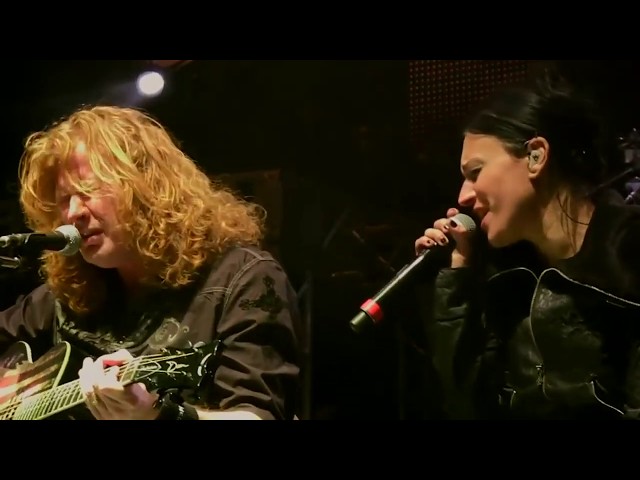
“A Tout Le Monde” has stood at the emotional center of Megadeth’s catalog since its first appearance on the 1994 album Youthanasia. A contemplative outlier in a body of work famed for velocity and bite, the song traded blitzed tempos for a mid-paced, minor-key anthem that invited listeners to consider legacy, compassion, and the words we leave behind. More than a decade later, the band revisited it as a duet with Cristina Scabbia of Lacuna Coil, reframing its message through a striking vocal dialogue. An acoustic interpretation extends that evolution again, peeling away distortion to expose the song’s architecture and the raw humanity built into its lyric and melody.
Stripped of its heavier armor, “A Tout Le Monde” becomes a study in resonance and restraint. Melodic lines that once pushed through thick electric guitars now surface with clarity, revealing the harmonic logic and careful pacing that have helped the composition endure across generations of metal fans.
The Acoustic Reimagining
The acoustic setting foregrounds the track’s core strengths. Arpeggiated guitar figures replace the metallic crunch, allowing each chord to bloom and decay naturally. Dynamics carry more weight: slight variations in attack and sustain shape the emotional peaks in ways amplification often smooths over. Where the original leans on tight riffing and a steady backbeat, the acoustic rendition invites air and space between phrases, letting the lyric breathe.
Subtle supporting textures enhance this intimacy. A second guitar voice, gently panned or seated just behind the lead, adds depth without crowding the arrangement. Bass enters as a warm foundation rather than a driver, tracing the chord roots and reinforcing cadences. Percussion, if present, stays minimal, emphasizing pulse with light touches that keep focus on voice and melody. The result is a piece that feels close to the listener, less a performance across a stage than a conversation within arm’s reach.
Vocal Chemistry: Mustaine and Scabbia
Dave Mustaine’s vocal presence remains unmistakable, his grainy timbre softened by the acoustic frame. The delivery is measured and candid, shaped around the natural cadence of the lyric. In this setting, the creak and catch of his phrasing become assets, communicating wear, resolve, and the perspective of someone weighing what really matters.
Cristina Scabbia’s contribution refracts the song’s sentiment through a second lens. Known for her role in Lacuna Coil, she brings a smooth, crystalline tone that complements Mustaine’s edge. When she enters, either in response lines or close harmonies, the song’s narrative shifts from solitary reflection to shared recognition. The blend works on several levels: timbral contrast clarifies the melody, layered harmonies widen the chorus, and the duet structure underscores a theme of communal farewell rather than isolated lament.
The chorus, already memorable in its original guise, gains new color when Scabbia threads harmony around the French refrain. Her lines often hover above Mustaine’s, brightening the top of the chord while preserving the gravity below. It is a balance of light and shadow that suits the song’s central paradox: a farewell offered with compassion rather than despair.
Themes That Endure
“A Tout Le Monde,” which translates roughly to “to everyone,” is a message in the shape of a song. Its verses consider mortality and memory without resorting to melodrama, while the chorus extends a final, universal address. Over the years the track has sparked conversation, at times misread as nihilistic. The acoustic treatment helps clarify intent, letting the words sit at the front of the mix, free of sonic turbulence.
Understated verses outline the mechanics of parting, the shift in perspective that comes when one contemplates the sum total of connection and consequence. The refrain functions as a benediction: concise, repeatable, sturdily built for voices to join in. That communal aspect is crucial. Sung in French, the chorus suggests breadth—the message crosses borders, languages, and genres. The duet amplifies this sense of reach, embodying dialogue and mutual acknowledgment rather than a solitary soliloquy.
Arrangement and Sound
Without over-arranging, the acoustic version introduces small but meaningful details:
- Fingerpicked guitar patterns replace palm-muted crunch, outlining chord tones and elevating melodic motion.
- Open voicings add width, allowing harmonies to ring and overlap in the stereo field.
- Vocals are recorded intimately, with close miking that captures breath and subtle inflection, supported by a natural, room-like reverb.
- Harmonies are layered with care, entering strategically to lift pre-choruses and broaden choruses without overwhelming the lead.
- Rhythmic elements remain restrained, emphasizing tempo and feel without dominating the mix.
Each choice pushes the lyric forward. Where electric guitars once provided drama, the acoustic timbre supplies detail. The song’s bones—melody, chord progression, conversational phrasing—stand clear and sturdy.
Bridging Traditions: Thrash Roots, Gothic Shading
One of the most compelling aspects of this collaboration is the way it links different corners of heavy music. Megadeth’s heritage is rooted in thrash, precision riffing, and political acuity. Cristina Scabbia arrives from a lineage of atmospheric, melody-first gothic metal. The acoustic format creates common ground: intensity is no longer a function of tempo or distortion, but of delivery, intonation, and the emotional contour of two entwined voices.
Instead of forcing contrast, the arrangement embraces complementarity. Mustaine carries the narrative spine, Scabbia sheens its edges and extends its resonance. Listeners used to the kinetic surge of full-band Megadeth find the same structural integrity in a reduced palette, while fans of Scabbia’s expansive, mood-driven approach can appreciate how a classic metal composition flexes to accommodate new textures.
Legacy and Reception
Across decades, “A Tout Le Monde” has proven unusually adaptable. It thrives as a studio piece, a live sing-along, a duet, and, as here, an unplugged reflection. That durability speaks to songcraft more than spectacle. The progression is straightforward, the hook immediate, and the message clear enough to sustain reinterpretation.
Acoustic settings often reveal whether a song can stand on its own without production muscle. In this case, the arrangement underscores the original’s strengths while illuminating new ones. The weight of distorted guitars becomes the weight of silence between strums, and the anthemic chorus becomes a communal hush, the sort that can fill a room without raising the volume.
Moments to Listen For
- The first entrance of Scabbia’s harmony, which reframes the chorus from introspective to inclusive.
- The transition from verse to pre-chorus, where a small shift in dynamics sets up the melodic lift.
- The bridge, pared back to near-stillness, inviting attention to the lyric before the final refrain.
- The closing cadence, where sustained chords and layered vocals settle the song with calm finality.
Why This Version Matters
Acoustic interpretations of metal repertoire can feel like novelties if they lean on contrast alone. This rendition avoids that trap. It succeeds because it treats the song’s essence with respect, then leans into duet chemistry and dynamic nuance to say something new. By presenting “A Tout Le Monde” at room temperature rather than a boil, Megadeth and Cristina Scabbia reveal its durability and its heart: a message addressed to everyone, delivered plainly, and, in this case, shared between two distinct voices that meet in the middle.
For long-time listeners, it is a reminder of why the composition has lasted. For newcomers, it is a doorway into Megadeth’s melodic sensibility and Scabbia’s deft command of atmosphere. Either way, the acoustic frame does what the best reimaginings do: it sharpens focus, deepens feeling, and lets a familiar song ring with fresh clarity.
Megadeth Ft. Cristina Scabbia – A Tout Le Monde (Acoustic) Related Posts
- SPIRIT ADRIFT – I Shall Return (LYRIC VIDEO)SPIRIT ADRIFT has released a new single titled "I Shall …
- Kim Carnes – Bette Davis EyesKim Carnes' iconic song "Bette Davis Eyes" has been remastered …
- Clutch – Slaughter BeachClutch's latest single, "Slaughter Beach," draws inspiration from a nighttime …
- AGAINST MYSELF – Through The End Of Times (OFFICIAL VIDEO)The official video for "Through The End Of Times" by …
- Scorpion Flower"Scorpion Flower," a track by the Portuguese band Moonspell, is …
- The Melvins | House Of StromboThe Strombo Show features The Melvins in a special performance …