A Defiant Cut From Back From The Dead
Wicked Ways arrives as one of the most confrontational moments on Halestorm’s album Back From The Dead, a record steeped in resilience, survival, and hard-won self-acceptance. The official video sharpens that edge, framing the track’s refusal to be sanitized or redeemed. Rather than courting absolution, the band leans into the messy, magnetic pull of imperfection. It is a vow of agency delivered with teeth.
Sound, Weight, and Delivery
Musically, Wicked Ways is a granite-hewn hard rock stomp built on a thick, mid-tempo riff and a rhythm section that hits like a swinging sledge. Guitars arrive with a serrated crunch, locking into muscular downstrokes and quick, clipped figures that clear space for the vocal. The tonal focus is low and heavy, yet there is a bright edge in the upper mids that keeps every chug articulated. The bass underpins the guitars with a gritty, rounded growl that anchors the track’s gravity.
The drums drive the song with a confident pocket, leaning into kick-and-snare patterns that feel both martial and groovy. Fills are concise and purposeful, flaring up between vocal lines but never pulling the attention away from the hook. Small production decisions—muted chord punches, tight stops, and feedback swells that rise and recede—heighten the sense of tension and release.
Lzzy Hale’s performance sits at the core. Verses ride a controlled simmer, close to the mic, with phrasing that teases the edge of a snarl before breaking into full-throated declaration in the chorus. The topline is immediately memorable, built on a short lyrical pivot that repeats with mounting force. Stacked harmonies widen the refrain into a wall of voices, and the bridge ratchets the intensity with a taut, percussive build-up that feeds the final run through the chorus. It is concise songwriting engineered for impact, all precision and pressure.
Confession Without Contrition
Halestorm has long used outlaw imagery as a way to frame independence, but Wicked Ways moves past simple provocation. The lyric trades in duality—sinner and saint, prayer and defiance, devotion and appetite—and refuses to collapse that tension into a neat resolution. The repeated “Don’t call me an angel” line sets the stakes early. What follows is not a plea for forgiveness, nor a celebration of pure chaos. It is a document of boundaries and ownership, and of the fact that desire, regret, and resolve often coexist.
The references to devils, saints, and open-eyed prayer signal a spiritual vocabulary repurposed for self-knowledge rather than penitence. The character at the center of the song embraces contradiction as a compass rather than a flaw to be corrected. That stance places Wicked Ways squarely within hard rock’s tradition of personal manifesto, yet it also undercuts the genre’s simplistic rebel pose. The confession is frank, the accountability is internal, and the freedom sought is less about breaking rules than about refusing to be misnamed.
Video Language and Atmosphere
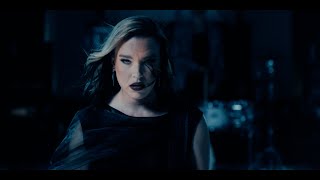
The official video leans into the song’s confessional architecture with performance-forward intensity. High-contrast lighting, sharp cuts, and claustrophobic framing keep the focus on expression and gesture. Visual motifs echo the lyric’s preoccupation with absolution and appetite: divided selves, mirrored glances, and a play between shadow and saturated color that suggests temptation and trial. The edit keys closely to the rhythm section, tightening on snare hits and opening up on chorus lifts to match the track’s push-and-pull.
Costuming and set design subtly underline the tug-of-war between sanctified and profane without slipping into caricature. The camera often centers on Hale in confrontational close-ups, then pulls back to capture the full band in lockstep. What emerges is not a narrative with tidy cause and effect, but a chamber of internal debate where performance becomes testimony. The imagery never overwhelms the music; instead, it reinforces the idea that the song itself is the ritual.
Instrumentation in Focus
- Guitars: A primary riff carved from tightly muted power chords and percussive palm-muting, punctuated by brief lead figures. The tone balances saturation with clarity so the vocal sits on top without losing weight beneath it.
- Bass: Thick, slightly overdriven lines that shadow the guitar pattern and provide the low-end glue. Occasional melodic turns in pre-chorus passages add movement without undercutting the groove.
- Drums: A command of space defines the kit work—air between the hits that makes each impact feel heavier. Cymbals are used sparingly for lift in the chorus, reserving splash for moments that puncture the mix rather than wash it out.
- Vocals: Verses favor close, almost spoken phrasing with a jagged edge, while the chorus unleashes a belt that blooms into layered harmonies. Backing vocals amplify the lyric’s insistence, creating a call-and-response effect within a single voice.
- Production touches: Strategic stops, quick-drop transitions into the chorus, and subtle textural elements that appear on the edges of the stereo field to widen the hook without cluttering the center.
Context Within the Album
Back From The Dead grapples with isolation, instability, and the slow return to form that follows any rupture. Wicked Ways aligns with that arc by staging a confrontation not with an external antagonist, but with the stories we tell ourselves to stay small or pure. In the context of the record, it functions as a pivot from survival to sovereignty: the moment where vulnerability stops asking permission and becomes a sharpened tool. The tone is heavier and leaner than some of Halestorm’s early work, yet the band’s core strengths—memorable hooks, unflinching vocals, and an instinct for dynamics—remain intact.
Why It Lands
Wicked Ways works because it does not separate muscle from meaning. Every musical choice serves the lyric, and the lyric cuts with enough specificity to avoid cliché. The chorus offers a sing-along that resists easy redemption, which makes it stick harder. In the official video, the band translates that friction into a stark, kinetic performance piece that lives in the same charged space as the song. It is a standout chapter in Halestorm’s ongoing catalogue of self-possession, proof that heaviness hits hardest when it moves with purpose.
Halestorm – Wicked Ways [Official Video] Related Posts
- Pantera – 5 Minutes Alone (Official Music Video)The official music video for Pantera's "5 Minutes Alone," from …
- Belle Margot – Bound to the River | A traditional-style American blues song (Fate and Fatalism)"Bound to the River" is a traditional American blues song …
- In This Moment – Bloody Creature Poster Girl (Visualizer)In This Moment has released a visualizer for their track …
- SOILWORK – Valleys Of Gloam (OFFICIAL MUSIC VIDEO)Soilwork has released the official music video for "Valleys Of …
- ACCEPT – Fast As A Shark – Restless And Live (OFFICIAL LIVE CLIP)The live recording "RESTLESS AND LIVE" by Accept is now …
- Judas Priest – You’ve Got Another Thing Comin’ (Live from the ‘Fuel for Life’ Tour)Judas Priest's iconic track "You've Got Another Thing Comin'" is …