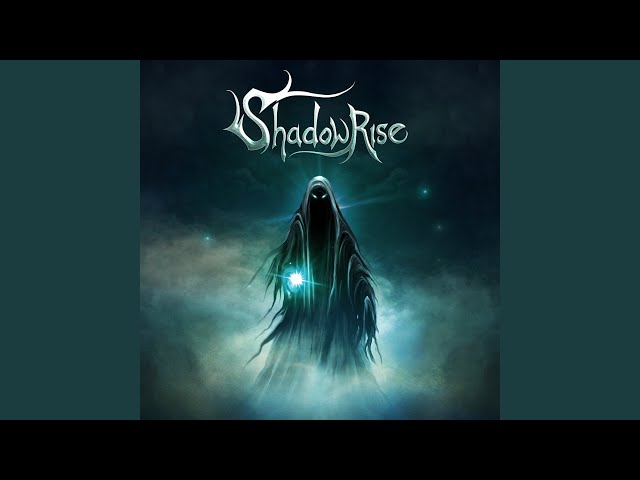
Release Details
Cradle of Death is a studio track by Shadowrise, issued on March 23, 2018. It appears on the self-titled release Shadowrise and was distributed digitally via TuneCore. The recording is credited ℗ 2018 Shadowrise, underscoring an independent, artist-controlled rollout. In the late 2010s, that combination of self-released ownership with global digital distribution became a key avenue for underground heavy music to reach listeners without the mediation of a traditional label system.
- Artist: Shadowrise
- Track: Cradle of Death
- Release: Shadowrise (self-titled)
- Date: March 23, 2018
- Rights: ℗ 2018 Shadowrise
- Distribution: TuneCore
Independent Metal in a Digital Moment
By 2018, the mechanics of getting heavy music into the world had changed. Platforms made it possible for bands to record at home or in modest studios, retain their rights, and distribute to major streaming services. For metal, which thrives on niche subgenres and word-of-mouth discovery, this shift amplified the reach of artists working outside the conventional industry. A recording such as Cradle of Death sits within that environment: a focused song presented to a global audience with minimal intermediaries, where the sound and artwork decisions flow directly from the creators.
This DIY infrastructure often brings an immediacy that suits extreme and atmospheric music. Artists can iterate quickly, dial in mixes that emphasize their priorities, and maintain aesthetic control. In that sense, the appearance of Cradle of Death on a self-titled release in 2018 reads as a statement of intent, the kind of move that can frame a band’s identity for new listeners.
The Weight of a Title
Even before a note is heard, Cradle of Death is an evocative phrase. It juxtaposes an image of origin and nurture with finality, setting up a dialogue between creation and decay. In heavy music, that tension has long been fertile ground for lyrical and conceptual work. Themes of cyclical existence, the collapse of old orders to make way for the new, and the intimacy of mortality are common touchstones. Titles like this do not simply aim for shock. They establish a mood, suggesting a narrative arc where tenderness and terror coexist, where darkness is not purely destructive but also formative.
Such framing often guides the musical language as well. Whether an artist leans toward the grand sweep of symphonic metal, the serrated drive of melodic death metal, the glacial atmosphere of blackened forms, or the grit of modern heavy rock, “cradle” and “death” encourage dynamic contrasts: soft versus loud, dissonance versus consonance, reflection versus urgency.
Sonic Architecture and Genre Affinities
In this corner of contemporary heavy music, songs are typically constructed around an interplay of rhythm, texture, and tension. While choices vary from project to project, a track built to carry the emotional heft suggested by Cradle of Death often features:
- Guitars that draw lines between melody and impact. Layered rhythm parts deliver weight, while lead figures or harmonized motifs trace the song’s emotional contour. Tuning, picking articulation, and controlled gain help define the low-end punch or the high-end bite.
- Rhythm sections that shape momentum. Drums may emphasize double-kick propulsion, tom-led transitions, or cymbal wash to underscore mood changes. Bass often serves a dual role, anchoring the harmonic center and adding grit to the mix’s undercurrent.
- Vocal approaches that prioritize contrast. Many modern heavy tracks explore a spectrum from clean, melodic lines to harsher textures, whether growled, screamed, or distorted. This contrast can mirror the thematic friction suggested by the title.
- Atmospheric or orchestral textures. Keyboards, synth beds, or subtle samples can extend the arrangement’s depth, lending cinematic dimension without overpowering the core band performance.
Production in the late 2010s often aimed for clarity without sacrificing heft. Guitars are multi-tracked for stability, drums are edited to sit tightly with the guitars, and vocals are layered for emphasis at key moments. Mix engineers in heavy music frequently carve out the low-mid frequencies to prevent congestion, allowing the bass guitar to read clearly beneath high-gain instrumentation and ensuring that kick drums cut through dense arrangements.
Emotional Trajectory and Narrative Possibilities
Without presuming specific lyrics, a track carrying the title Cradle of Death invites an emotional trajectory that moves from contemplation to confrontation. Intros might favor brooding harmonies or a spare guitar figure to set a reflective tone. Verses could build incrementally, adding rhythmic insistence or choral layers, before a chorus resolves or reframes the tension. Bridges or instrumental passages often serve as turning points, either intensifying the central theme with technical interplay or momentarily collapsing the arrangement to expose a fragile core.
These structural choices are not mere genre habits. They function as storytelling devices, allowing the music to hold contradictory feelings in balance. The “cradle” can be suggested by warmth in harmony or a moment of clean voice, while “death” arrives through harmonic minor inflections, chromatic movement, or a sudden increase in rhythmic density. When handled with care, the result is not just heaviness for its own sake, but a contour that rewards multiple listens.
Self-Titled Significance
Placing Cradle of Death on a self-titled record carries practical meaning. Self-titled releases often function as a consolidation of identity, an assertion that “this is who we are.” They can mark either a debut or a pivotal reintroduction, a way to fix a sonic and aesthetic profile in listeners’ minds. Within that frame, a track with such a charged title can serve as a keystone, encapsulating the broader work’s sensibility through its arrangement choices, lyrical concerns, or tonal palette.
Whether positioned as an opener, a centerpiece, or a late-album pivot, a song like this often acts as a thematic axis around which other tracks rotate. It can crystallize the mood, establish a signature riff vocabulary, or foreground the vocal approach that resonates throughout the album.
Listening Approach
Approaching Cradle of Death with attentive ears highlights the small decisions that define heavy music in 2018’s independent landscape. Listen for the way guitars share space, how the drum patterns lock with the bass during transitions, and where the voice or lead instrument chooses intensity over restraint. Notice if the arrangement admits light into the darkness: a brief clean passage, a countermelody that softens the blow, a harmonic turn that suggests resilience rather than nihilism.
These details are where underground artists often distinguish themselves. In a field crowded by high-gain saturation and precision editing, character lives in the micro-choices: a slightly behind-the-beat snare fill, a vibrato that carries extra ache, a synth pad mixed just low enough to be felt more than heard.
Context and Continuity
Releases like Cradle of Death also speak to the continuity of underground culture. While production tools evolve, the core drive remains the same: to translate difficult emotions into sound with honesty and force. The independent model reinforces that continuity, allowing artists to move at their own pace, emphasize their obsessions, and build communities track by track rather than chasing transient trends.
That sense of purpose is often audible. Even without a full roadmap of an album’s narrative, a strong, thematically potent song can serve as both entry point and anchor, inviting listeners deeper into the project while standing solidly on its own.
Final Notes
Cradle of Death by Shadowrise arrived in 2018 as part of a self-titled release, independently controlled and digitally distributed. The title points to a set of tensions that heavy music is uniquely equipped to explore, and the period’s production language offers ample tools for expressing them. For listeners drawn to dark atmospheres, muscular arrangements, and the interplay of vulnerability and ferocity, it presents a compelling waypoint in the ongoing story of independent metal.
Cradle of Death Related Posts
- Shireen – SO HUMAN OF YOU [official music video]Shireen's latest music video for "So Human Of You," directed …
- Niamh – Ballad of Oisín and Niamh Niamh’s Lament | A tale of love, enchantment, and tragedyThe song "Niamh’s Lament" draws inspiration from the Celtic legend …
- FORBIDDEN LORE – Endless Run (OFFICIAL VIDEO)The official video for "Endless Run" by Forbidden Lore showcases …
- ResurrectionThe article discusses the release of "Resurrection" by Ashes Of …
- Suicidal Angels – Beggar Of Scorn"Beggar Of Scorn" is a track from Suicidal Angels' album …
- Devil Electric – ‘Hypnotica’ (Official Video)Devil Electric has released "Hypnotica," the lead single from their …