Setting the Scene
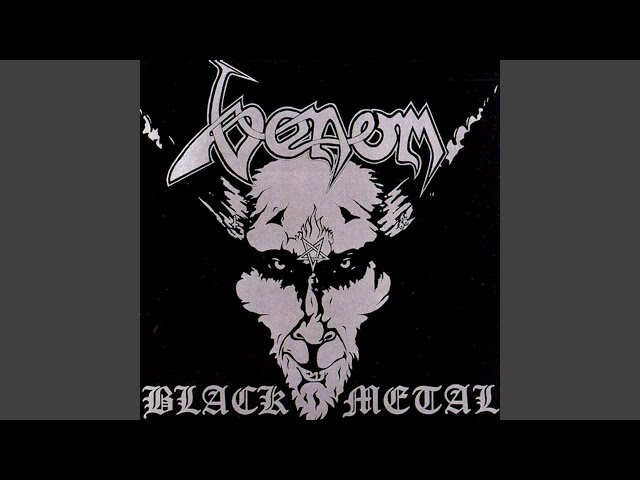
Released in 1982 on Venom’s second full-length, Black Metal, Countess Bathory captures the trio’s uncompromising push toward a harsher, faster, and more chaotic form of heavy music. At a time when the New Wave of British Heavy Metal was broadening metal’s reach, Venom opted for abrasion over refinement, fusing the speed and sneer of punk with an obsession for horror and the occult. The result helped set the tone for the first wave of extreme metal, and Countess Bathory stands as one of the album’s most striking cuts.
The Legend Behind the Title
The song draws on the notorious figure of Elizabeth Báthory, the early 17th-century Hungarian noblewoman accused of torturing and murdering numerous young women. Over centuries, her story has grown into myth, with folklore portraying her as a vampiric aristocrat bathing in blood to preserve youth. Venom tap into that lurid legend as a vehicle for shock and moral transgression, framing the narrative with blunt, visceral language and a rhythm that barrels forward like a historical nightmare reimagined for a smoke-filled club.
Sound and Structure
Musically, Countess Bathory is fast, direct, and efficiently structured. The introductory riff arrives with no preamble, relying on tight, palm-muted downstrokes and a minor-key bite. Verses move with a clipped, martial cadence, pushing words forward in short, emphatic bursts before slamming into a chant-like chorus. It is classic Venom economy: no ornate transitions, just hard edges and forward motion.
The arrangement relies on a dynamic interplay between distortion-thick guitar, overdriven bass, and unrelenting drums. The rhythm section’s density leaves little air, which intensifies the claustrophobic feel of the subject matter. Brief guitar breaks slash through the mix with a feral, almost off-the-rails quality, prioritizing attitude and immediacy over technical flash.
Guitar, Bass and Drums
Mantas drives the track with riffs that combine speed metal urgency and hard rock muscle. The phrasing leans on staccato patterns and open-string accents for momentum, while the lead moments are ragged and expressive, filled with bends, squeals, and deliberately scuffed edges. Rather than polished virtuosity, the soloing amplifies the song’s menace and volatility.
Cronos anchors everything with a gritty, midrange-forward bass tone that doubles key riffs for weight and adds a snarling counter-presence under the guitar. His playing locks to the kick drum, giving the chorus a blunt-force impact. The slight saturation on his signal blurs the line between rhythm guitar and bass, thickening the center of the mix.
Abaddon maintains a relentless, straight-ahead pulse. The drumming emphasizes drive over ornamentation, favoring steady double-time feels and insistent cymbal work. Fills are lean and percussive, designed to shove the band into each new section without sacrificing pace.
Vocal Delivery and Lyrical Focus
Cronos delivers the lyrics in a raw, serrated bark. The phrasing is clipped, the consonants hit hard, and the lines snap into the beat with punk-like precision. The words fixate on violence, decadence, and aristocratic cruelty, reflecting Venom’s fascination with transgression as both theme and aesthetic. The chorus distills the narrative to a brutal refrain, the band using repetition to turn a historical name into a menacing incantation.
Production Character
Co-produced by Venom and Keith Nichol, the recording is unapologetically abrasive. Guitars sit upfront with a grainy, saturated texture, the bass saturates the mid-band, and the drums cut through with a dry, immediate snap. The mix privileges energy and presence over finery. Minor bleed and saturation become part of the aesthetic, reinforcing the sense that the track could detonate at any moment. The result is a sound that feels live, physical, and antagonistic, an ideal frame for the band’s subject matter and delivery.
Position Within Black Metal
On Black Metal, Countess Bathory functions as a pressure point, distilling the album’s core attributes into a few lean minutes: velocity, blunt riffing, lurid storytelling, and an almost garage-punk disregard for restraint. It underscores Venom’s broader shift away from traditional heavy metal’s melodicism toward something rawer and more confrontational, helping define the album’s identity as a touchstone for musicians seeking to push intensity further.
Legacy and Resonance
While countless bands would later refine, deepen, and diversify the aesthetics that Venom helped introduce, Countess Bathory remains a template for raw extremity. Its tight structure, stripped-back aggression, and shock-laden narrative anticipate the rough-edged power that would shape early thrash and the formative years of black and death metal. The song’s fascination with historical atrocity, treated as gothic folklore, also points to a lyrical pathway that extreme metal would revisit for decades.
Credits and Release Information
- Artist: Venom
- Album: Black Metal
- Track: Countess Bathory
- Release date: November 1, 1982
- Label: ℗ 1982 Sanctuary Records Group Ltd., a BMG Company
- Producers: Venom, Keith Nichol
- Vocals/Bass: Cronos (Conrad Lant)
- Guitar: Mantas (Jeffrey Dunn)
- Drums: Abaddon (Anthony Bray)
- Composers: Anthony Bray, Conrad Lant, Jeffrey Dunn
Countess Bathory Related Posts
- The Eastern Shadow (Remix) | This song tells the tale of a nameless entity who came from the East"The Eastern Shadow (Remix)" narrates the arrival of a mysterious …
- NERVOSA Live At OBSCENE EXTREME 2015 HDNERVOSA delivered a powerful performance at the OBSCENE EXTREME festival …
- Belle Nix – Don’t Be Afraid – Where the Fear Begins | The tender, terrifying space between heartsBelle Nix's song "Where the Fear Begins" explores the complex …
- BUTCHER BABIES – Marquee (OFFICIAL ALBUM STREAM)The official album stream for "Marquee" by Butcher Babies is …
- Lamb of God – Nevermore (Official Music Video)Lamb of God has released the official music video for …
- MOONLIGHT HAZE – It’s Insane (Official Video)Moonlight Haze has released "It's Insane," the third single and …