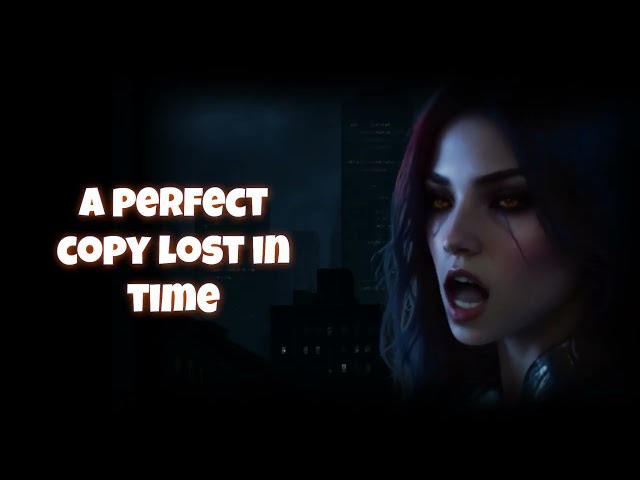
Fog, Mirrors and the Double: Entering the Crossroads
“Crossroads of Myself” finds Evil Beauty stepping into the dim perimeter where folklore, psychology and nocturnal rock converge. Inspired by the unsettling urban legend of Setealém, the track frames a surreal confrontation with the self, staged at a fog-drenched junction that seems to exist between worlds. The premise is simple and unnerving. You meet your own reflection in the wild, a clone that speaks with your voice but moves with a fraction of delay, a darker version that might be waiting to step forward the moment you turn away. From that image, Evil Beauty builds a meditation on identity, choice and the terror of replacement that lingers long after the last note decays.
Setealém as Portal, Not Postcard
Setealém is a modern urban legend that circulates through Brazilian message boards and late-night retellings, a whispered map of a parallel city glimpsed through liminal spaces. Accounts often describe sudden slips into a place that looks like our own but feels misaligned, where streets repeat, rules bend and escape routes are uncertain. Evil Beauty treats this mythology less as a tale to illustrate and more as a lens. The song borrows the legend’s key feeling, the sense that reality has been nudged a few degrees off center, and uses it to charge every musical and lyrical decision with unease.
Lyrical Double Exposure
The words turn the legend inward. Rather than cataloging features of a mystic city, the lyrics stage a face-to-face encounter with a parallel self at the crossroads, that most symbolically loaded of settings. The cloned figure functions like a distorted mirror, reflecting familiar gestures with unfamiliar intent. Lines circle recurring motifs of split timelines, shadowed footprints and echoing choices, asking whether the darker twin is an invading force or a long-suppressed facet finally granted form. The refrain hints that decisions never vanish, they reverberate, and in the reverberation we begin to resemble what we fear. It reads like a compact gothic parable about agency, regret and the slippery edges of personal myth.
Gothic Architecture in Sound
Musically, “Crossroads of Myself” draws on the chiaroscuro of gothic rock and its neighboring territories, stitching post-punk pulse to darkwave atmosphere. The arrangement privileges negative space and shadow, with guitar figures that linger like vapor trails and synth beds that drift in slow, ominous currents. The rhythm section locks the track to a steady stride that suggests the measured pace of someone moving through mist, cautious, alert. Textures are deliberately tactile, from the grain on the bass to the damp sheen of reverbs that place the performance in an imagined city square at night.
Instrumentation and Tension
Even without pyrotechnics, the song sustains a quiet dread by balancing elements that pull in opposed directions:
- A bassline with a cold, chorused edge establishes a hypnotic root, anchoring the narrative while hinting at emotional drift.
- Guitars favor minor intervals and chiming arpeggios, their delay tails acting like phantom footsteps that never quite resolve.
- Synths supply the otherworldly content, low drones and faintly detuned pads that thicken the air the way fog thickens light.
- The drums keep a measured, post-punk gait. Crisp hi-hats and a clipped snare articulate the path forward, while tom accents arrive like signposts in the haze.
The harmonic language leans into modal shades that convey foreboding. Suspended chords are allowed to hang. Occasional dissonances flare at the edges of phrases, suggesting the moment the double steps a half-beat out of sync. It is the sound of a crossroads rendered in tones and overtones, every turn plausible, no turn safe.
Vocal Presence and the Clone’s Whisper
The vocal performance is central to the track’s psychological pull. The lead voice occupies the foreground with clarity, yet there is a persistent feeling of company. Subtle doubles, shadow harmonies and whispered layers slip in at strategic points, giving the impression that the clone is always half an inch from the mic, repeating, persuading, daring. Phrasing is patient and weighted, as if each line is being tested for truth before it is allowed to pass. When the melody widens, it does so without showmanship, maintaining the cool temperature that gothic delivery often demands while still letting a human crack appear when the narrative demands it.
Production as Storytelling
The mix treats atmosphere not as ornament but as plot. Reverbs are tall rather than wide, suggesting vertical distance and the hollow of civic architecture swallowed by weather. Delay lines sometimes return just late enough to feel like answers from another room. Low frequencies remain disciplined, avoiding bloat while keeping a physical thrum beneath the feet. Small choices add narrative detail, like the faint saturation on a repeated guitar motif that makes it feel older, or the filtered intro that resembles the act of crossing a threshold. These touches never distract. They place the listener at the edge of that fogged intersection and leave them to choose a direction.
Lineage and Local Gravity
Evil Beauty’s approach sits comfortably within the long arc of artists who have scrutinized the self under low light. Classic goth and post-punk reference points hover at the periphery, but the track’s restraint and modern low-end speak to contemporary darkwave and underground rock as well. Rather than cosplay past eras, it adopts their values, clarity of mood, disciplined pacing, commitment to atmosphere, and applies them to a subject that feels acutely now. In an age shaped by algorithmic mirrors and curated selves, the doppelgänger is no longer only a supernatural device. It is a daily condition, and “Crossroads of Myself” recognizes the terror and poetry in that fact.
The Crossroads Motif, Recast
Crossroads symbolism threads through blues myths, folk tales and rock iconography. Here it is stripped of pacts and grand gestures and returned to its basic function, a place where direction is chosen and fate is quiet. The song works because it refuses melodrama. Its power lies in slow accumulation and a refusal to blink. You meet your reflection, you listen, and you realize the act of choosing does not end the echo. The echo is what you live with.
Final Impression
“Crossroads of Myself” distills a sprawling urban legend into a concentrated internal drama, rendering Setealém as a state of mind rather than a set of coordinates. It is a careful, unhurried piece of gothic rock, attentive to texture and tone, generous with silence, and unwavering in its focus on identity’s more treacherous edges. If the song offers guidance, it is not in the form of rescue. It offers a map with fog on it, a reminder that every version of the self waits at the intersection and that the road you take learns your name as you walk it.
Evil Beauty – Crossroads of Myself | Inspired by the unsettling urban legend of Setealém Related Posts
- Niamh – Ballad of Oisín and Niamh Niamh’s Lament | A tale of love, enchantment, and tragedyThe song "Niamh’s Lament" draws inspiration from the Celtic legend …
- HYPOCRISY – Chemical Whore (OFFICIAL MUSIC VIDEO)The official music video for "Chemical Whore" by HYPOCRISY, from …
- MOONLIGHT HAZE – The Rabbit Of The Moon (Official Video)Moonlight Haze has released "The Rabbit Of The Moon," the …