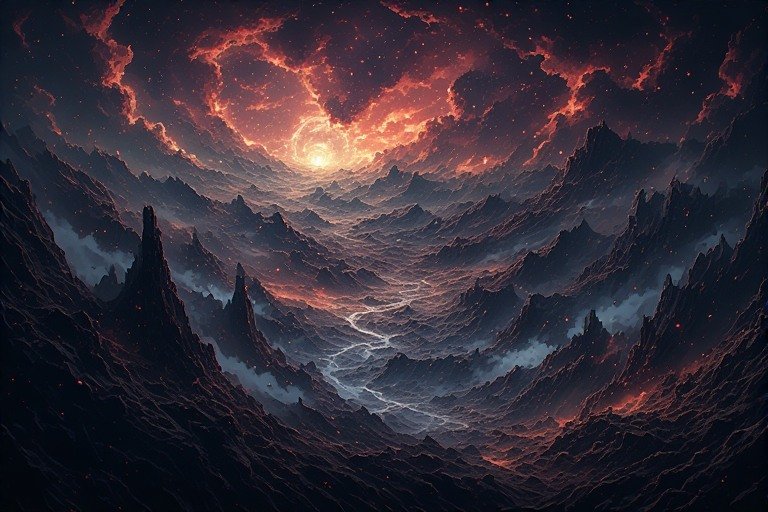
The Allure of the Dark Goddess
The Dark Goddess has long captivated the human imagination, a figure steeped in mystery and complexity. She is not merely a character from myth or folklore, but rather an archetype that embodies the unexplainable aspects of existence. In a world that often seeks to categorize and define, the Dark Goddess stands as a testament to the power of the unknown, challenging our perceptions of morality, creation, and divinity.
Beyond Good and Evil
One of the most fascinating aspects of the Dark Goddess is her existence beyond the binary of good and evil. She is not a villain nor a savior; instead, she represents the primordial forces of creation and destruction that exist before the imposition of moral frameworks. This duality invites us to explore the depths of our own consciousness, urging us to confront the shadows that dwell within.
The Veil of Mystery
In many traditions, the Dark Goddess is often depicted as veiled or obscured, symbolizing the profound mysteries of life that remain beyond human comprehension. This veiling is not an act of concealment but rather an invitation to engage with the unknown. To look upon her is to acknowledge that some truths cannot be fully articulated or understood, a reminder that existence itself is a tapestry woven with threads of darkness and light.
The Names We Give
Names hold power, and in the case of the Dark Goddess, they can be limiting. While figures like Kali, Lilith, and Hecate are often invoked, they represent only fragments of a much larger archetype. The Dark Goddess resists definition, existing in a realm that transcends specific identities. This fluidity allows her to embody the myriad aspects of femininity, creativity, and destruction, making her a universal symbol of the divine feminine.
Reclaiming the Dark Feminine
Modern interpretations of the Dark Goddess often fall into the trap of viewing her as a wounded or repressed version of the light feminine. However, this perspective diminishes her power and complexity. The Dark Goddess is not broken; she is whole and complete, representing desires and passions that exist without justification or moral approval. Her essence challenges us to embrace our own complexities, desires, and fears without the need for validation.
The Resurgence of Interest
In recent years, there has been a notable resurgence of interest in the Dark Goddess, reflecting a collective yearning for depth in a world increasingly obsessed with clarity and optimization. As societal pressures mount, the Dark Goddess emerges as a reminder that not all meaningful experiences are visible or easily understood. She appears in art, literature, and dreams, inviting us to explore the depths of our own psyches.
A Call to Acceptance
Ultimately, the Dark Goddess does not seek to save us or provide answers. Instead, she invites us to accept the complexities of existence, reminding us that divinity is not always benevolent but is always real. To encounter her is to embrace the shadows that accompany light, acknowledging that both are essential to the human experience. In this acceptance lies the potential for profound growth and understanding.
CONTINUE TO MAIN POST
Embracing the Enigma: The Dark Goddess in Modern Mysticism Related Posts
- The Enigmatic Allure of the Daughters of the Crimson Gaze: Music’s Dark MuseExplore the captivating intersection of music and myth through the …
- Unlocking the Mystical Language of Lucid Dreams: A Journey Through Astral SymbolismLucid dreaming opens a portal to a realm rich with …
- The Ankh in Modern Occultism and Pop CultureIn the modern world, the Ankh has transcended its origins …