Setting the Scene
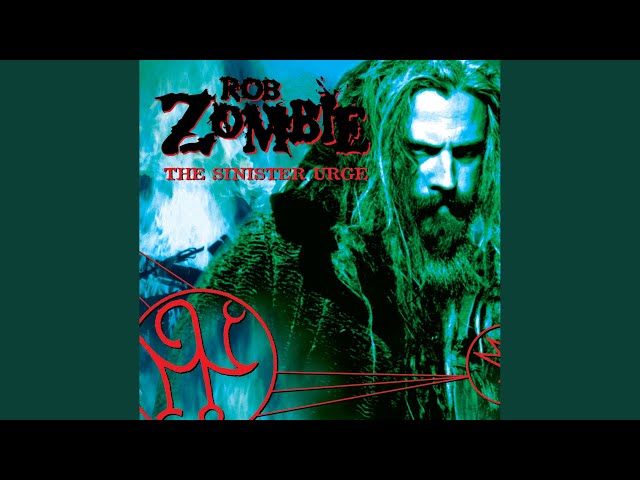
Rob Zombie’s Demon Speeding arrives from his 2001 album The Sinister Urge, a record that codified his fusion of industrial heft, hook-driven hard rock, and the pulp-horror imagery that had defined him since his days fronting White Zombie. Issued by Geffen Records and created in close partnership with producer and programmer Scott Humphrey, the track exemplifies Zombie’s ability to translate midnight-movie obsessions into a high-octane, radio-leaning form of industrial metal. It is both sleek and feral, engineered for impact yet steeped in the grime of psychotronic cinema and hot-rod iconography.
Sound and Production Detail
Demon Speeding runs on a tightly coiled engine of distorted guitars, precision-cut programming, and a rhythm section built for forward momentum. Humphrey’s production frames everything with clarity and force. The guitars arrive thick and metallic, trimmed to the riff. Sequenced elements cut through with synthetic bite, and the mix carves out space for steady, mid-tempo drive rather than headlong chaos. The result is one of Zombie’s signature balances: the mechanical snap of industrial music paired with the physical punch of a live band.
The arrangement feels deceptively simple. A muscular verse stride gives way to a chorus that slams shut like a trap, defined by chant-ready phrasing and clipped rhythmic cadences. Subtle studio details, from stacked vocal layers to percussive accents and loops, add dimension without clutter. The sonic architecture prioritizes momentum and impact, each layer supporting the illusion of an engine redlining but never losing traction.
Band Chemistry and Individual Contributions
The track benefits from a touring-hardened lineup that understood Zombie’s blend of theater and power. Guitarist Riggs grinds out the primary motifs with cleanly articulated chug and a tone that sits right in the pocket of Humphrey’s mix. Blasko locks his bass to the kick drum, feeding the low end that keeps the groove glued and propulsive. John Tempesta, long associated with groove-forward heavy music, anchors the song with unwavering time and a feel that makes every accent count. Their performances underscore a key aspect of Zombie’s approach in this era: industrial textures intensify the music, but the band’s human swing keeps it from tipping into cold, mechanical rigidity.
Vocally, Zombie leans into his well-honed persona. The delivery is serrated and emphatic, closer to rhythmic incantation than classic metal belting. He uses phrasing as percussion, snapping syllables to the grid while his timbre contributes grit and menace. The production highlights this, often doubling lines or ghosting the main vocal with filtered layers to enhance the track’s theatrical punch.
Lyrical Drive and Imagery
Demon Speeding draws on a visual lexicon Zombie has made his own. Speed, danger, chrome, and the supernatural collide in a pulp collage that nods to muscle-car mythologies and grindhouse villains. The language conjures motion and risk, as if the narrator is steering headlong into something thrilling and slightly cursed. Rather than linear storytelling, the lyrics work in emblematic flashes, emphasizing atmosphere and cadence. The words hit like signposts flicking by at night, more evocative than expository, and designed to be shouted back in unison.
Within The Sinister Urge
The Sinister Urge takes its title from a 1960 film by Ed Wood, a pointed clue to the album’s cinematic DNA. Across the record, Zombie and Humphrey double down on a post-industrial hard rock sound that favors spectacle, groove, and tightly engineered hooks. In that context, Demon Speeding functions as a statement of purpose. It captures the record’s central aesthetic: glamorous grime, precision production, and imagery lifted from the B-movie shelf and blown up to IMAX scale. If Hellbilly Deluxe established the template for Zombie’s solo voice, The Sinister Urge refines it, and this track is one of the clearest distillations of that refinement.
Texture, Space, and Momentum
What keeps Demon Speeding compelling is not sheer density but the way the song breathes. The band and production make strategic use of tension and release. Verses feel coiled, choruses flare open, and the bridge space allows tonal color to creep in without deflating the central drive. Effects are present but purposeful, with synths and samples acting like neon signage on a midnight strip rather than taking over the skyline. You can trace the influence of industrial pioneers in the razor-edged programming, but the arrangement tilts toward hard rock dynamics. That push-pull is the track’s core design principle.
Creative Partnership
The Zombie–Humphrey collaboration was critical to the sound of this era. Humphrey’s command of programming, editing, and mix detail enabled the sleek aggressiveness that defines Demon Speeding. At the same time, Zombie’s sensibility as a curator of imagery and a builder of live-band energy ensured the music remained tactile. The production team around them, including mixer and engineer Frank Gryner, reinforced this duality with a mix that is both polished and heavy. Everything is where it needs to be, from the drum transients to the vocal placement, but the record avoids sterile perfection. It is modern, loud, and built to hit.
Why It Endures
Demon Speeding endures because it distills several threads of late-90s and early-2000s heavy music into a concise, memorable form. It has the riff-first instinct of groove metal, the economy and punch of hard rock, and the club-tight contour of industrial production. Paired with Zombie’s unmistakable aesthetic vocabulary, the track becomes more than just another heavy cut. It feels like a mission statement for a pop-savvy strain of industrial metal that prizes visuals, chorus architecture, and beat-conscious precision as much as sheer volume.
Release and Credits
Released in 2001 via Geffen Records, Demon Speeding appears on the album The Sinister Urge. The track reflects a collaborative studio effort that married heavy musicianship with meticulous production.
- Producers: Scott Humphrey, Rob Zombie
- Composer-Lyricists: Scott Humphrey, Rob Zombie
- Vocals: Rob Zombie
- Guitar: Riggs
- Bass: Blasko
- Drums: John Tempesta
- Programming, Mixing: Scott Humphrey
- Mixing, Engineering: Frank Gryner
- Assistant Recording Engineer: Dan Burns
- Label: Geffen Records
Final Notes
As a compact blast of industrial-strength rock, Demon Speeding exemplifies Rob Zombie’s command of image, rhythm, and impact. It is built with an editor’s precision and a showman’s instincts, loud enough for arenas and sharp enough for headphones. More than two decades on, it still captures the thrill of flooring the accelerator into the dark, guided by neon and grit, and backed by a band and production team that knew exactly how to make speed feel cinematic.
Demon Speeding Related Posts
- Within Temptation – Bleed Out (Full Album Visualizer)Within Temptation's new album, "Bleed Out," is now available for …
- Judas Priest – Breaking the Law (from Epitaph)Judas Priest's "Breaking the Law" encapsulates themes of frustration and …
- Voodoopriest – Juggernaut – Official VideoVoodoopriest has released the official video for "Juggernaut," a track …
- The Distillers – “Beat Your Heart Out” (Official Video)The Distillers have released the official music video for "Beat …
- EPICA – THE PHANTOM AGONY (Official video – HD remastered)EPICA's "The Phantom Agony," featured in their album of the …
- Belle Mada – Almost Mine | A heartfelt ballad about the bittersweet ache of loving someone"Almost Mine" by Belle Mada is a poignant ballad that …