Steel, Sand and Songcraft
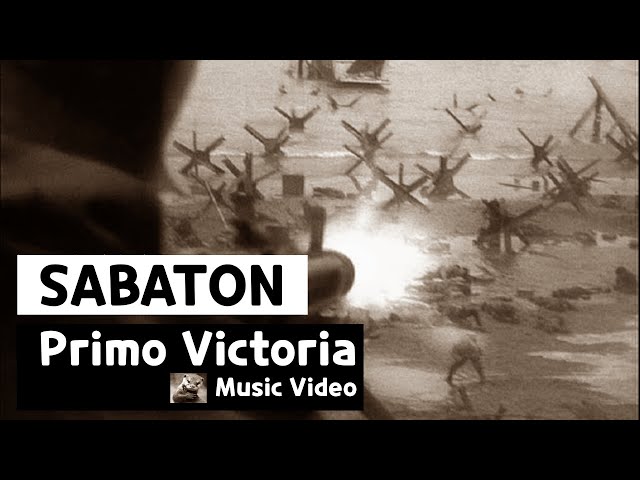
Sabaton’s “Primo Victoria” endures as one of modern power metal’s clearest statements of purpose, a rousing anthem that folds the scale of history into a tightly coiled riff and a chorus built for massed voices. Framed around the Allied landings in Normandy on 6 June 1944, the song transforms a pivotal moment of World War II into a piece of heavy music that feels both cinematic and immediate. In this fan-made music video, footage from classic war films and documentaries is cut to the track’s driving pulse, turning Joakim Brodén’s call to arms into a visual march across surf, smoke and steel.
D‑Day in Focus
The Normandy landings, codenamed Operation Neptune, opened the Western Front that would lead to the liberation of German-occupied France and, eventually, much of Western Europe. It remains the largest seaborne invasion in history. As the song’s title suggests, “Primo Victoria” frames that day as a first, decisive victory in a long and brutal campaign, honoring the soldiers who went ashore while acknowledging the harrowing cost paid on the beaches and in the skies. The track does not attempt to narrate the entire battle step by step. Instead, it channels the urgency of the first wave, the tension of waiting craftside before the ramp drops, and the grim clarity that defines a soldier’s perspective when orders are simple and consequences are not.
How the Song Is Built
“Primo Victoria,” released in 2005 as the title track of Sabaton’s album of the same name, is a masterclass in direct, communicative metal. The band works with familiar power metal materials and focuses them toward clarity:
- Guitar architecture: Twin rhythm guitars lay down a chugging foundation, tightly palm-muted in the verses, then opening into broad power chords for the chorus. Melodic lead lines shadow the vocal hook, building a call-and-response tension that explodes as the refrain hits.
- Rhythm section: The drums sit in a brisk, forward-leaning tempo, alternating between straight-ahead driving beats and surging double-kick passages. The bass remains locked to the guitars, adding weight to every downbeat and helping the choruses feel anthemic rather than ornate.
- Keyboards as atmosphere: Rather than dominate, the keys add a sheen that suggests strings and brass, a cinematic layer that gives the music a martial contour without turning it symphonic. They widen the stereo field and underscore the sense of scale.
- Vocal delivery: Brodén’s distinctive baritone anchors the verses with a clipped, declarative phrasing, then opens into long, carrying lines for the chorus. Gang vocals bolster the title chant, built to be shouted by a crowd, a feature that has made the song a reliable live set centerpiece.
The result is a song that moves with the logic of a coordinated assault. Verses advance step by step, pre-choruses gather momentum, and the refrain breaks through like a breach in a fortified line.
Words from the Shoreline
Sabaton’s lyrics take the vantage point of the attacking soldiers, emphasizing preparation, resolve and the blunt arithmetic of war. The famous chorus juxtaposes transcendence with horror, capturing the paradox of purpose in combat without romanticizing it. References to “first wave on shore” and “history’s written today” keep the song grounded in the immediate experience of landing, rather than the grand strategy unfolding beyond the beachhead. The language is plain and emphatic, which suits the band’s ethos of treating military history with directness and respect.
Cut to the Clash: The Fan-Made Montage
The video aligns “Primo Victoria” with iconic imagery from cinema and television, weaving together perspectives from sea, land and air. The choices are smart, giving viewers a broad look at the operation while amplifying the song’s rhythm and structure:
- The Longest Day (1962): Black-and-white clarity and sweeping, multi-angle storytelling lend the montage a classic frame. The film’s wide shots of armadas and beachlines mirror the track’s expansive choruses.
- Saving Private Ryan (1998): The visceral Omaha Beach sequence underlines the song’s punchier measures, with handheld chaos and shellshock cuts aligning to the drum surges and guitar accents.
- Band of Brothers (2001): Nighttime drops and scattered firefights pair with verse sections, adding suspense and disorientation that resolve as the chorus arrives.
- My Way (2011): The film’s international vantage and battlefield flux contribute texture, reminding viewers that D‑Day’s story intersects with many lives and nationalities.
- Rommel (2012): Glimpses of German command posts and strategic tension set a counterpoint to the Allied push, a visual echo of the song’s push-and-pull dynamics.
- D‑Day: Allied Landings in Normandy (2019) – WOT NA: Documentary-style segments and recreated footage fill gaps between fictionalized scenes, grounding the montage in recognizable historical imagery.
- Primo Victoria – The D‑Day Landings – Sabaton History 075: Brief inclusions nod to the band’s educational series, which contextualizes the song’s subject matter for listeners who want more than the anthem alone.
Editing choices make the most of the music’s architecture. Verse lines land on faces, boots and orders given. Pre-choruses cut to soldiers bracing as ramps lower. Choruses burst into long takes of beach rushes and artillery flashes. The visual pacing mirrors the arrangement, which is why the montage feels intuitive even as it draws from different sources and visual languages.
Sound and Image in Concert
What makes this pairing effective is restraint. The montage never tries to outpace the song, and the song leaves space for images to tell their own stories. Keyboards frame vessels massing off the coast, guitars dig into the churn of surf and sand, and the title chant turns into the video’s recurring rallying point. The viewer is not asked to relive every tactical detail. Instead, they are guided through a concentrated emotional arc that remains faithful to the subject’s gravity.
Sabaton’s Historical Lens
Sabaton have built a catalog that engages with conflicts across eras, often concentrating on individual bravery, strategic turning points and the unforeseen human consequences of war. “Primo Victoria” crystallized that mission early in their career. It treats D‑Day with a mixture of respect and blunt candor, emphasizing sacrifice without sliding into triumphalism. That balance is a big part of why the song has outlived release cycles and trends. It invites listeners to sing, but it also encourages them to read, watch and learn.
Legacy and Live Life
Over time, “Primo Victoria” has become one of the band’s signature tracks. Its chorus is built for arenas, yet its subject matter keeps the energy grounded in remembrance. The song often prompts fans to arrive at shows already knowing the words, which turns performance into a communal act of recall. That same combination of immediacy and reflection is what fuels projects like this video, where listeners become editors, curators and co-authors of how the music is seen.
Credits
- Song: “Primo Victoria”
- Artist: Sabaton
- Montage sources:
- The Longest Day (1962)
- Saving Private Ryan (1998)
- Band of Brothers (2001)
- My Way (2011)
- Rommel (2012)
- D‑Day: Allied Landings in Normandy (2019) – WOT NA
- Primo Victoria – The D‑Day Landings – Sabaton History 075
As a piece of heavy music history and a compact lesson in pacing a montage, “Primo Victoria” remains a reference point. It is the sound of boots hitting the surf and of a chorus large enough to carry the memory forward.
Sabaton – Primo Victoria (Music Video) Related Posts
- Lynyrd Skynyrd – I Need YouLynyrd Skynyrd's "I Need You" showcases the band's signature Southern …
- Evil Beauty – Never Known, Never Gone | A groove rock anthem for an immortal drifter (Music Video)"Never Known, Never Gone" is a groove rock anthem depicting …
- Green Eyes – Saturn – Echoes of the Titans | This song is inspired by the ancient myth of the TitansThe song "Green Eyes - Saturn - Echoes of the …
- WALK IN DARKNESS – Last Siren (feat. Nicoletta Rosellini)"WALK IN DARKNESS - Last Siren" features Nicoletta Rosellini and …
- Belle Margot – Whiskey & Lace | A song about a love that was both intoxicating and painful"Whiskey & Lace" explores the complexities of a love that …
- Veil of Midnight"Veil of Midnight" explores themes of darkness and introspection, inviting …